
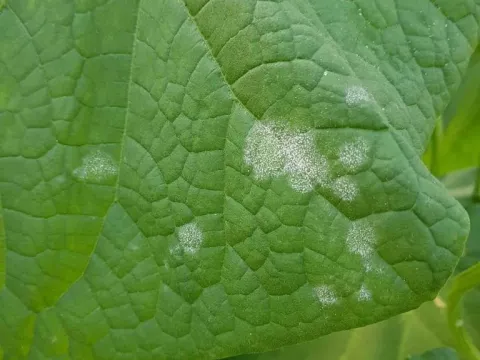
Powdery mildew of cucurbits
Erysiphe cichoracearum
Powdery mildew of cucurbits is caused by the obligate biotrophic fungus Erysiphe cichoracearum. It is an Ascomycete fungus that infects its hosts by extracting nutrients through specialized structures called haustoria.
What the section contains
Powdery mildew of cucurbits
The fungus produces a white, powdery fungal growth (mycelium) on the surfaces of leaves, petioles, and stems. This white coating is composed of massive amounts of mycelium and conidia, which are the asexual reproductive spores.
The pathogen completes its life cycle by utilizing these conidia for rapid secondary infections throughout the growing season, facilitating the quick spread of the disease within the crop canopy.
Survival occurs via cleistothecia, which are small, dark fruiting bodies that overwinter on dead plant debris in the soil or on perennial weed hosts near the planting area.
The fungus requires living host tissue to grow, which defines it as an obligate parasite. This biological constraint dictates its persistence throughout the year, especially in protected greenhouse environments.
The disease causes significant economic losses in all cucurbitaceous crops, including cucumbers, squash, pumpkins, melons, and watermelons, both in field production and greenhouse cultivation.
The fungus severely interferes with the plant's photosynthetic capacity by covering the leaf surface, which reduces the plant's ability to produce sugars needed for fruit development and growth.
Premature leaf drop is a common symptom, leading to the exposure of fruits to direct sunlight, which frequently results in sunscald, further reducing the market quality and shelf life of the harvest.
Yield reduction is caused by stunted growth, poor fruit set, and reduced fruit size. In severe cases, the infected foliage dries up completely, making the plant highly susceptible to other pathogens.
In addition to physical damage, the taste and nutritional value of the fruits can be compromised, as the plant prioritizes survival over sugar accumulation in the fruits when stressed by the pathogen.
Powdery mildew typically appears mid-season, particularly when conditions become favorable with moderate temperatures and fluctuating humidity levels, which often lead to dew formation on foliage.
Temperatures between 20°C and 25°C are ideal for the rapid development of the disease. While high humidity favors the germination of spores, the fungus can thrive in relatively dry environments.
Greenhouse conditions often exacerbate the disease due to poor ventilation, high planting density, and stagnant air, which create the perfect microclimate for the rapid proliferation of conidia.
Stress factors such as nutritional imbalances, particularly excessive nitrogen fertilization without adequate potassium, can weaken the plant's immune system, making it more prone to infection.
Late summer periods with warm days and cool, moist nights are peak times for powdery mildew outbreaks, as the environmental cycles align with the fungus's reproductive requirements.
The initial signs of infection are small, circular, white powdery spots appearing on the leaves. These spots grow rapidly in size and eventually merge, covering large sections of the foliage.
As the infection progresses, the leaves turn yellow, become brittle, and curl. The white mycelium may also spread to stems, petioles, and even young fruits if the disease pressure is high.
Under heavy infection, the powdery coating may appear grey or brownish. Tiny black structures known as cleistothecia may become visible within the older mycelial mats near the end of the season.
Plants affected early in their growth stage show significant stunting, reduced branching, and a general lack of vitality, leading to reduced flower production and poor fruit development.
- White powdery spots on the leaf surface.
- Yellowing and chlorosis of infected leaves.
- Leaf curling and necrosis.
- Stunted plant growth and reduced yield.
- Premature death of the plant foliage.
Effective management begins with strict field hygiene, including the complete removal and destruction of crop residues post-harvest to minimize the primary inoculum in the soil.
Crop rotation remains a crucial preventive strategy. Avoiding the planting of cucurbits in the same soil for at least three to four years helps break the disease cycle of the overwintering fungus.
Selecting and planting resistant or tolerant hybrid varieties is the most sustainable way to reduce dependency on chemical control methods while maintaining high productivity levels.
Chemical control involving fungicides from classes such as triazoles or strobilurins should be used judiciously, ensuring rotation between different chemical groups to prevent the development of resistance.
Cultural practices such as improving greenhouse ventilation, maintaining adequate plant spacing, and ensuring proper nutrition contribute to stronger plants capable of resisting fungal penetration.