
Powdery mildew of crucifers
Erysiphe cruciferarum
Description
How to identify
The causative agent of this disease is the fungus Erysiphe cruciferarum Opiz ex L. Junell. It is an obligate parasite, which means it requires living host tissue to survive and complete its life cycle.
The fungus reproduces via asexual spores called conidia, which are easily disseminated by wind currents. This allows the disease to spread rapidly across large fields during the active growing season.
Erysiphe cruciferarum thrives in warm, dry to moderately humid conditions. Unlike many other fungal pathogens, it does not require free water or heavy rainfall on the foliage for infection to occur.
A wide range of crops belonging to the Brassicaceae family are susceptible to this pathogen. Major hosts include oilseed rape (canola), broccoli, cabbage, cauliflower, radish, and mustard.
The fungus overwinters as cleistothecia (small, dark fruiting bodies) on crop residues or as mycelium on perennial weeds. In spring, these sources release spores that initiate the primary infection cycle.
What it damages
The powdery mildew infection covers leaves with a fungal mat that blocks sunlight, significantly reducing the host's photosynthetic capacity. This leads to stunted growth and reduced overall plant vigor.
Heavy infections cause premature yellowing, withering, and death of leaves (senescence). This early leaf drop prevents the plant from storing enough energy to develop healthy seeds or heads.
In oilseed rape, severe outbreaks lead to poor seed filling, reduced oil content, and smaller seed size, which causes substantial losses in crop yield and market value.
For leafy vegetables, the presence of the white fungal growth renders the produce unmarketable. The tissue under the mildew can also become necrotic and prone to secondary infections.
The economic impact includes not only yield reduction but also increased costs for fungicide applications and potential storage problems if infection remains on harvested produce.
Signs of infestation
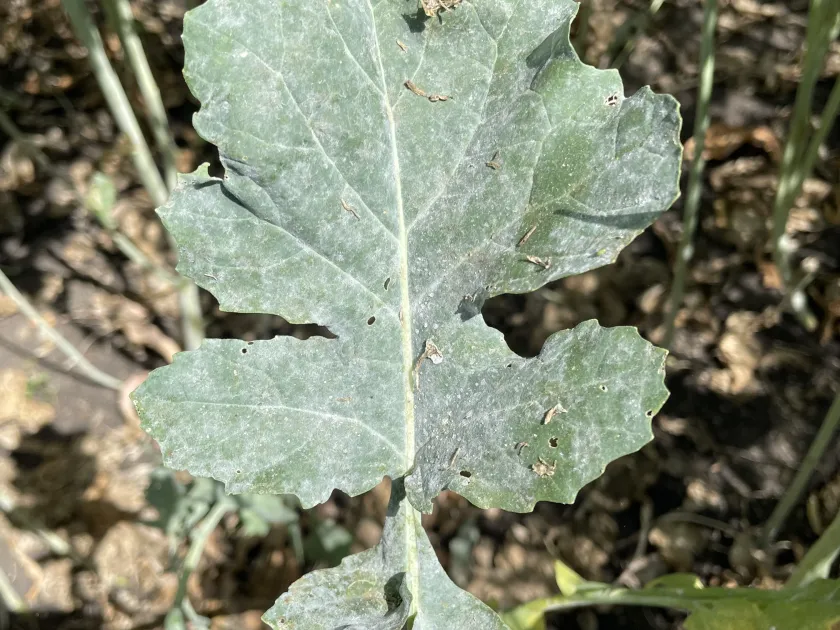
The first symptoms are small, white, circular spots of fungal mycelium that appear primarily on the upper surfaces of older leaves. These spots resemble a fine layer of flour or dust.
As the disease progresses, these spots expand and coalesce to cover the entire leaf surface, often spreading to stems, petioles, and even floral parts of the plant.
The white powdery appearance may eventually turn greyish or dull brown as the fungus matures. Tiny, black, spherical structures called cleistothecia appear scattered throughout the mycelium.
Affected tissues may show signs of yellowing or chlorosis around the patches. In advanced stages, leaves become brittle, curl, and die prematurely, leaving the plant severely compromised.
- White, flour-like patches on leaves.
- Expansion of mycelium across the entire plant.
- Formation of dark-colored sexual fruiting bodies.
- Chlorosis, leaf curling, and premature senescence.
Control measures
Cultural control is the first line of defense. Thoroughly incorporating crop residues into the soil after harvest helps eliminate the primary source of overwintering inoculum.
Crop rotation is essential to break the pathogen's life cycle. Avoiding brassica crops in the same field for at least 3 years reduces the pressure of the disease significantly.
Chemical control involves the timely application of fungicides, particularly those belonging to the triazole or strobilurin groups, when environmental conditions favor disease spread.
Weed management is critical. Removing wild brassica species like shepherd's purse or field mustard from field margins minimizes the reservoir of the pathogen during the off-season.
Balanced fertilization, particularly adequate potassium and phosphorus, strengthens plant cell walls and immunity, whereas excessive nitrogen application can make plants more susceptible to mildew attack.
Causes diseases · 1
Discussion
No discussions yet — be the first.