
Powdery mildew of soybean
Erysiphe diffusa
Description
How to identify
The pathogen responsible for powdery mildew in soybean is Erysiphe diffusa (formerly Microsphaera diffusa), an obligate biotrophic fungus within the Erysiphales order. It survives by drawing nutrients directly from the host plant's epidermal cells.
The fungus develops a white mycelial mat that covers leaves, stems, and petioles. It reproduces via conidia, which are asexual spores that spread rapidly through the air to colonize healthy plant tissues.
During the late season, the fungus produces cleistothecia, which are small, dark, closed fruiting bodies. These structures allow the pathogen to survive harsh environmental conditions and overwinter in crop residues.
Taxonomically, it belongs to the Kingdom Fungi and the Phylum Ascomycota. As a specialized pathogen, it has evolved to adapt efficiently to the specific physiological conditions provided by leguminous plants.
The wind acts as the primary vector for the dispersal of conidia. This allows the disease to spread quickly across large areas, making the management of the pathogen a significant challenge for soybean producers.
What it damages
The primary host for this pathogen is soybean (Glycine max). While it is specifically adapted to this crop, it can also infect other wild legumes, which may serve as alternative sources of primary inoculum.
Powdery mildew infection affects the photosynthetic capacity of the plant by covering the leaf surface with mycelium. This leads to reduced carbon assimilation and overall plant stress.
Yield loss is primarily driven by premature leaf senescence and abscission. When the canopy is lost early in the season, the plant cannot properly fill pods, resulting in smaller seeds and lower oil content.
In severe cases of infestation, the infection can cover the entire foliage, significantly reducing the vigor of the plant. This weakens the crop and makes it more susceptible to other environmental stressors.
Furthermore, the presence of the fungus impacts the aesthetic and seed quality, which can be critical for growers aiming for premium production standards or seed-grade soybeans.
When it appears
Disease development is most active during mid-to-late summer when temperatures reach 20–25°C. These temperatures are optimal for the germination of spores and the subsequent colonization of host tissues.
Moist conditions, including high relative humidity and morning dew, facilitate the spread of the pathogen. While moisture is beneficial for development, the fungus can continue to reproduce even under relatively dry conditions.
The infection cycle is continuous throughout the growing season. Multiple generations of conidia can be produced, allowing the disease to intensify exponentially if weather conditions remain favorable.
As the season draws to a close, the fungus shifts from asexual reproduction to sexual reproduction. Cleistothecia are formed on the leaves, marking the transition into a dormant stage for the winter.
Agronomic practices that create dense, humid plant canopies often exacerbate the disease. Lack of ventilation at the base of the plants promotes the establishment of the first mildew patches.
Signs of infestation
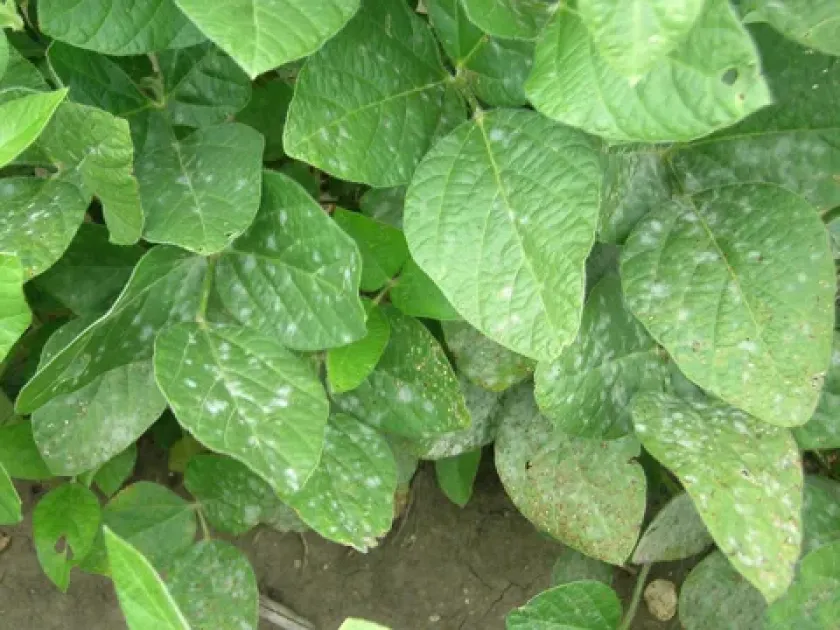
The hallmark sign of Erysiphe diffusa is the appearance of white, powdery spots on the leaf surface. Initially, these patches are small and sparse, but they quickly grow and coalesce.
As the infection progresses, the powdery coating becomes more visible on stems and leaf stalks. Close inspection reveals small, dark, pepper-like dots, which are the maturing cleistothecia.
The tissue underneath the fungal growth begins to show chlorosis, followed by necrosis. The leaves may turn yellow and eventually brown, leading to a brittle and dried-out appearance.
Deformation of leaves, such as curling or crinkling, is a common symptom in heavily infected crops. The overall plant height and development might be stunted due to the severe nutrient loss.
In the field, infected areas can be identified by the distinct white "dusty" look of the foliage. This contrast with healthy green leaves makes it easy to spot during regular crop scouting.
Control measures
The most effective strategy for managing powdery mildew is the planting of resistant or tolerant soybean varieties. Breeding programs consistently work to incorporate resistance genes.
Cultural control includes effective crop rotation and the incorporation of crop debris into the soil. Deep plowing helps to destroy the overwintering structures of the fungus before the next season.
Fungicidal intervention is necessary when the disease threshold is reached. Products containing triazoles or strobilurins are effective in stopping the spread of the mycelium and sporulation.
Maintaining proper plant density and managing nitrogen application can reduce disease pressure. Excessive nitrogen can cause lush growth that is highly susceptible to infection, so balanced fertilization is key.
Regular monitoring of fields is essential for timely application of protective fungicides. By identifying the infection in its early stages, farmers can prevent it from reaching levels that significantly impact yield.
Causes diseases · 1
Discussion
No discussions yet — be the first.