
Powdery mildew of stone fruits
Podosphaera clandestina
The causative agent of this disease is the fungus Podosphaera clandestina, an ascomycete belonging to the order Erysiphales. It is an obligate parasite that colonizes the surface of leaves, shoots, and sometimes fruits of stone fruit trees, obtaining nutrients through specialized structures called haustoria.
What the section contains
Powdery mildew of stone fruits
The life cycle includes both asexual and sexual stages. Asexual reproduction involves the production of masses of conidia, which are easily dispersed by wind and rain. The sexual stage results in the formation of chasmothecia (cleistothecia), which allow the fungus to survive winter conditions.
The pathogen thrives in warm, dry weather interspersed with high humidity. Unlike many other fungal diseases, powdery mildew does not require free water on the leaf surface for germination, although humidity significantly promotes spore development and infection.
Microscopic examination reveals branched hyphae forming a superficial mycelial network. The conidia are produced in chains and appear as a white, powdery dust on the surface of infected plant parts, which is the most reliable diagnostic feature in the field.
Understanding the biology of Podosphaera clandestina is crucial for timing control measures. The fungus predominantly overwinters as mycelium in dormant buds or as fruiting bodies on fallen leaves and bark crevices, acting as a primary source of infection in the spring.
This disease primarily affects cherries, sweet cherries, peaches, and apricots. Infection leads to significant physiological stress, reducing the photosynthetic capacity of the tree and hindering its overall development and vigor.
Affected young shoots suffer from reduced elongation and curling, often leading to necrosis and premature death. This stunts tree growth, especially in young orchards, and significantly delays the productive maturation of the trees.
Leaf infection causes curling and yellowing, followed by premature defoliation. This leaf loss weakens the tree, reduces its energy reserves for the following season, and lowers its tolerance to cold temperatures and winter frosts.
When fruit is infected, the pathogen causes unsightly blemishes and, in many cases, hardening of the skin or cracking. These defects make the fruits unmarketable, causing severe economic losses for growers who rely on high-quality produce.
- Reduced yield potential
- Lowered fruit market value
- Stunted shoot development
- Premature leaf drop
- Increased tree susceptibility to winter injury
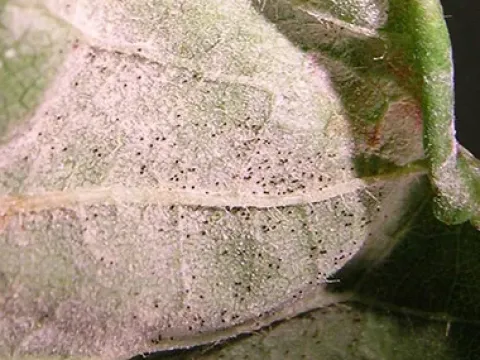
The hallmark symptom is the appearance of white, dusty patches on the surface of leaves, which can spread rapidly to cover the entire leaf area. This white mycelium is the fungal growth producing spores for dispersal.
Leaves infected with the fungus often show characteristic curling and distortion. As the infection progresses, the color of the infected area may shift from white to light grey, and eventually, small black dots appear on the surface of the mycelium.
These black dots are the chasmothecia (fruiting bodies), signaling the transition to the sexual phase of the life cycle. Their presence indicates that the fungus is entering a stage that is more resistant to environmental stress and chemical treatments.
Infected fruits show white patches that later develop into corky, cracked areas. This damage is often irreversible and makes the fruit highly susceptible to secondary infections by other opportunistic molds and decay-causing microorganisms.
In mature trees, the symptoms often appear first in the interior of the canopy where shading and higher humidity levels create a favorable microclimate for fungal proliferation, even if external weather conditions seem less than ideal.
Effective management begins with proper orchard hygiene. Removing and destroying fallen leaves and pruning away infected terminal shoots during winter pruning significantly reduces the primary inoculum for the next growing season.
Cultural practices such as proper canopy thinning and regular pruning help improve air circulation and sunlight penetration. This reduces the humidity levels within the canopy, creating a less hospitable environment for the fungus to thrive.
Chemical control involves the application of fungicides, particularly sulfur-based products, triazoles, or strobilurins. Rotation of chemical groups is essential to prevent the development of fungicide resistance in the Podosphaera clandestina population.
Biological control agents, such as the mycoparasitic fungus Ampelomyces quisqualis, offer a sustainable alternative to chemical fungicides. They actively parasitize the powdery mildew mycelium, effectively suppressing its spread in the orchard.
Monitoring the orchard for the first signs of infection is vital. Early detection allows for targeted treatments, which are much more efficient and cost-effective than attempting to manage an epidemic that has already spread throughout the entire plantation.