
Cucumber green mottle mosaic virus
Cucumber green
The causative agent of the disease is the Cucumber green mottle mosaic virus (CGMMV), which belongs to the Tobamovirus genus. It is a highly stable plant pathogen capable of surviving in the environment for years.
What the section contains
Cucumber green mottle mosaic virus
The virus is a rod-shaped particle that is easily transmitted through mechanical contact during routine plant maintenance. Its persistence makes it one of the most difficult viruses to eradicate in greenhouse settings.
The primary source of the virus is infected seeds, where it resides on the seed coat and within the embryo. Contaminated soil and crop residues act as secondary sources, allowing the virus to overwinter.
Transmission occurs through contaminated pruning tools, clothing, and direct contact between healthy and diseased plants. While insects can play a role, mechanical transmission is the dominant pathway for outbreaks.
Due to its resilience, the virus represents a significant threat to intensive vegetable production, requiring strict sanitation protocols to mitigate its spread.
CGMMV infects a wide range of cucurbits, including cucumbers, zucchini, melons, watermelons, and pumpkins. It is particularly devastating for greenhouse-grown cucumbers.
Infection is systemic and can occur at any stage of development. Once the virus enters the plant, it spreads rapidly throughout all tissues, severely hindering plant development.
Seedlings infected early in development are often stunted and fail to produce viable yields. This early-stage infection causes major economic losses for nursery producers and commercial growers.
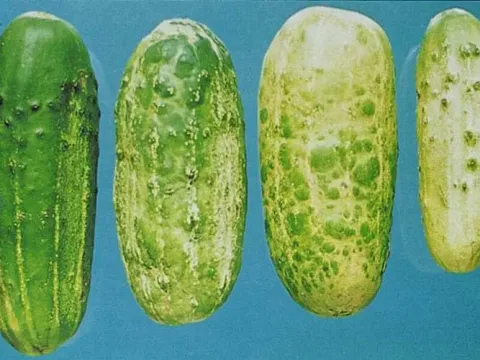
Fruits are severely affected, exhibiting mosaic patterns, surface blemishes, and physical deformations. Such fruits lose their market value, leading to substantial income loss for farmers.
The overall impact includes reduced yield, poor fruit quality, and the necessity to destroy infected plants, which further interrupts the production cycle.
Initial symptoms include a light green mosaic pattern on young leaves, which eventually progresses into more distinct mottling. Leaves may become distorted, crinkled, or exhibit blister-like growth.
Infected plants show signs of severe stunted growth and shortened internodes. In extreme cases, leaves may become thin and needle-like, indicating a breakdown of normal vascular function.
Fruits display irregular light green or yellowish spots, which contrast with the natural color of the fruit. They often become bumpy, lose their luster, and develop an unappealing appearance.
Internally, the flesh may contain necrotic spots, and fruits can develop a bitter taste. Premature ripening is common, with fruits remaining underdeveloped and failing to reach commercial size.
- Light green mosaic on leaves
- Leaf distortion and curling
- Mottled and bumpy fruit surface
- Overall plant stunting
- Bitter taste in fruit flesh
The primary strategy for controlling CGMMV is strict adherence to quarantine and the use of pathogen-free seeds. Seed testing and certification are essential for preventing the introduction of the virus.
Sanitation of tools is crucial. Pruning shears and knives should be sterilized with effective disinfectants after every contact with plants to prevent mechanical spread between rows.
Promptly identify, remove, and destroy any infected plants as soon as symptoms appear. Proper disposal is necessary to prevent the virus from contaminating the soil or equipment in the area.
Comprehensive disinfection of greenhouses, growing media, and containers during the off-season is required to eliminate persistent viral particles. Heat treatment and chemical sanitation are recommended.
Crop rotation and the use of resistant or tolerant cultivars are the most sustainable approaches to long-term disease management, minimizing the impact of potential infections.