
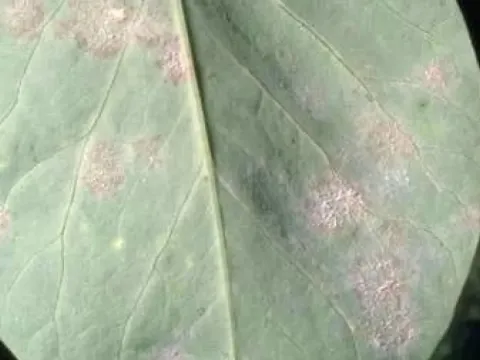
Cucurbit powdery mildew
Golovinomyces cichoracearum
Golovinomyces cichoracearum is an obligate parasitic fungus within the order Erysiphales, kingdom Fungi, known as a major causal agent of powdery mildew on various plant species.
What the section contains
Cucurbit powdery mildew
The fungus is characterized by its ectoparasitic lifestyle, where the mycelium grows on the surface of the plant epidermis, obtaining nutrients via haustoria that penetrate host cells.
It reproduces primarily through asexual conidia produced in chains, which create the characteristic white powdery appearance on leaves and stems of affected hosts.
Systemically, it is classified within the family Erysiphaceae and demonstrates significant host specificity, often affecting members of the Cucurbitaceae and Asteraceae families.
Identification of the species is typically confirmed through microscopic analysis of the conidial morphology and the presence of cleistothecia, which serve as overwintering structures.
The pathogen causes significant damage to cucurbits including cucumber, melon, zucchini, squash, and pumpkin, as well as several ornamental and weed species.
Infection primarily manifests on foliage, but severe infestations can cover petioles, stems, and fruits, severely impairing the plant's physiological functions.
By covering the leaf surface with mycelium, the fungus interferes with photosynthesis, leading to reduced energy production and stunted plant development.
As the disease progresses, the plant loses its ability to transport nutrients effectively, leading to reduced fruit yields, poor fruit development, and decreased market quality.
In greenhouse settings, this pathogen can lead to total crop failure if management practices fail to suppress its rapid spread during the growing season.
Inoculum sources include cleistothecia that have overwintered in plant debris or conidia arriving from nearby fields or weed hosts that remain green year-round.
Disease development is favored by temperatures ranging from 18°C to 25°C and high humidity levels, though the fungus does not require free water for germination.
Conidia are easily disseminated by wind currents, allowing the pathogen to spread rapidly across large fields or within enclosed greenhouse structures in a short period.
Favorable conditions for an outbreak usually occur when plant growth is dense and air circulation is limited, creating a stable microclimate for fungal growth.
The pathogen lifecycle is highly dependent on host tissue availability, and outbreaks typically peak during the mid-to-late stages of the plant's development.
The first symptoms are the appearance of small, circular, white, powdery spots on the upper and lower surfaces of the leaves, which eventually grow and merge.
The infected tissue begins to lose its green color, turning yellowish or chlorotic as the fungal colony becomes more established and dense.
As the infection spreads, the leaves may curl, become brittle, and eventually die, significantly reducing the plant's canopy and fruit-bearing potential.
- White, fuzzy, powder-like spots on leaves.
- Yellowing (chlorosis) of the leaf tissue.
- Leaf curling, distortion, and premature necrosis.
- Formation of tiny, black, spherical cleistothecia on older lesions.
Unlike downy mildew, which appears on the underside of leaves and is often restricted by leaf veins, powdery mildew appears as a superficial dusting across all plant surfaces.
Effective management includes strict sanitation practices, such as the removal and destruction of crop residues where the pathogen survives the winter months.
Crop rotation and maintaining adequate spacing between plants help to reduce humidity and improve air circulation, making the environment less favorable for the fungus.
Integrated pest management strategies often involve the use of sulfur-based fungicides, triazoles, or strobilurins applied at the first sign of symptoms.
Biological controls, such as applications of Bacillus subtilis, have proven effective in suppressing fungal growth in organic and conventional production systems.
The utilization of resistant or tolerant cultivars is the most sustainable approach, significantly reducing the necessity for repeated chemical applications throughout the season.