
Cucumber mosaic virus
Cucumber mosac
Description
How to identify
The causative agent is the Cucumber mosaic virus (CMV), a member of the Cucumovirus genus in the Bromoviridae family, known for its extensive host range.
The virus consists of spherical particles containing single-stranded RNA. It is considered one of the most widespread and damaging plant pathogens globally.
The virus is primarily transmitted in a non-persistent manner by aphids. These insects acquire the virus from infected plants within seconds of feeding.
Mechanical transmission also plays a significant role, as the virus can spread via contaminated pruning tools, hands, or contact between healthy and diseased leaves.
The pathogen persists in the root systems of perennial weeds during winter, providing a primary source of infection for new crops in the spring.
What it damages
This virus affects a broad range of crops, with cucurbits like cucumbers, squashes, and melons being particularly vulnerable to severe yield loss.
Solanaceous crops such as tomatoes, peppers, and eggplants are also highly susceptible, often showing systemic symptoms that impair their growth and development.
The infection disrupts fundamental physiological processes, including photosynthesis, which leads to stunted growth and reduced vegetative mass.
Infected fruits frequently show mosaic patterns, distortions, and wart-like growths, making them commercially unmarketable and poor in quality.
In cases of early-season infection, the total yield of a crop can be severely reduced, leading to significant economic losses for commercial growers.
When it appears
Symptoms typically appear during the active growing season, particularly when warmer temperatures coincide with high aphid populations.
The virus spreads continuously throughout the growing cycle, as long as vector insects are active and moving between susceptible plant hosts.
Higher temperatures generally accelerate the replication of the virus within plant tissues, making the symptoms more pronounced during hot summer days.
Perennial weeds act as a year-round reservoir, allowing the virus to emerge as soon as environmental conditions favor insect movement in early spring.
In greenhouse environments, the virus can persist and spread year-round if aphid control measures are neglected or if internal host plants are not cleared.
Signs of infestation
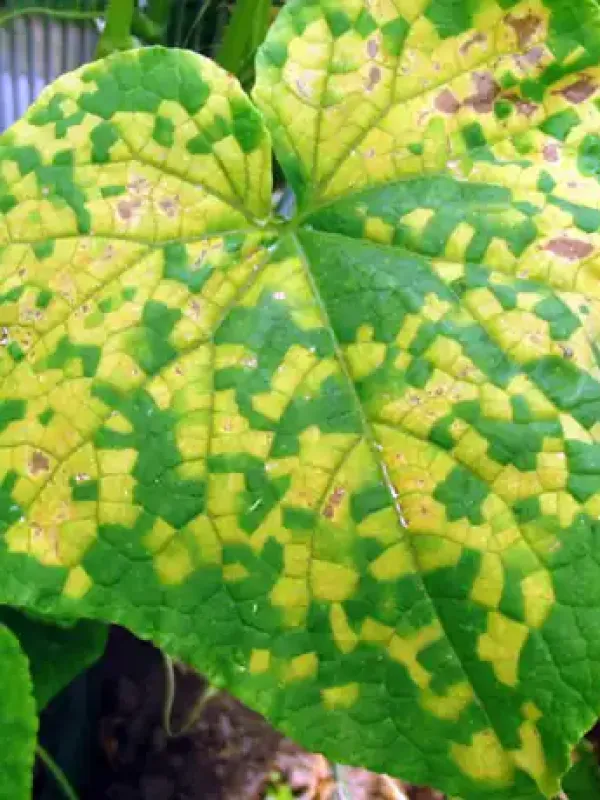
A classic symptom is the mosaic pattern on leaves, appearing as a mottled blend of dark green, light green, and yellow discoloration.
Leaves often exhibit severe deformation, becoming crinkled or curled, while the overall plant size is usually significantly smaller than healthy specimens.
Fruits are often misshapen, bumpy, and show characteristic pale or mottled spots, leading to a loss of the uniform color expected in healthy harvests.
On tomatoes and peppers, the virus may cause filiform (shoestring) leaves, where the leaf blade fails to develop fully, leaving only the central vein.
- Yellowing of leaf margins.
- Interveinal chlorosis.
- Shortened internodes on stems.
- Reduced fruit set and development.
Control measures
There is no curative treatment for plants infected with CMV, which makes proactive management and preventative practices the only viable strategy.
Rigorous control of aphid populations is essential, as these insects are the primary vectors responsible for the spread of the virus within the crop.
Eliminating host weeds around gardens and greenhouses is a critical step to remove the primary reservoirs of the virus during the off-season.
Using resistant or tolerant plant varieties is the most effective long-term method for managing the disease and ensuring a stable harvest.
Practicing good sanitation, including disinfecting pruning tools and carefully removing and destroying infected plants, helps limit the virus's spread.
Causes diseases · 1
Discussion
No discussions yet — be the first.