
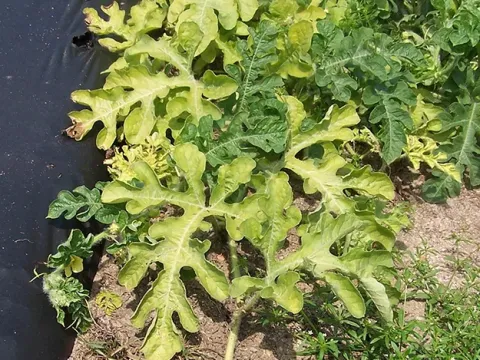
Cucurbit yellow vine
Yellow vine
Cucurbit yellow vine disease is caused by a phloem-limited phytoplasma, specifically Candidatus Phytoplasma asteris. This pathogen inhabits the vascular system of the plant, disrupting the translocation of essential nutrients.
What the section contains
Cucurbit yellow vine
The disease is primarily transmitted by the squash bug, Anasa tristis. The insect acquires the pathogen while feeding on infected plants and transmits it via its salivary glands during subsequent feeding sessions.
As an obligate parasite, the phytoplasma cannot survive outside of its host plant or insect vector. This biological dependency makes it challenging to eradicate once established in a region.
The phytoplasma is classified as a prokaryotic organism lacking a cell wall. Due to these unique biological characteristics, it is invisible under standard light microscopy, necessitating molecular diagnostic techniques like PCR.
The infection cycle is closely tied to the lifecycle of the squash bug, with disease incidence typically spiking when insect populations reach their peak during the active growing season.
This pathogen poses a significant threat to various cucurbits, including pumpkins, summer and winter squash, and muskmelons. Cucumbers can also be susceptible under specific environmental conditions.
Infection can occur at any growth stage, but plants infected at a younger age often exhibit the most severe stunting and reduced productivity. Early-stage infection frequently results in total crop failure.
Economic impact is driven by reduced fruit size, poor quality, and complete yield loss. Infected plants often wilt prematurely and fail to produce viable fruits for the market.
Field outbreaks are typically patchy, corresponding to the movement and feeding patterns of the squash bug population. In severely affected fields, yield losses can reach 100%.
Besides direct yield reduction, the stress caused by the phytoplasma weakens the plant's natural defense systems, making it highly susceptible to opportunistic pathogens and root rot diseases.
Initial symptoms include yellowing of the leaves, which often starts at the margins and progresses inward. Interestingly, the leaf veins often remain green, creating a distinct yellowing effect.
Plants become stunted with shortened internodes, giving them a bushy or rosetted appearance. Growth practically stops shortly after the systemic infection is fully established.
Cross-sections of the main stem or crown reveal discolored vascular tissue, often appearing tan to brown. This internal browning is a diagnostic indicator of vascular system blockage.
Fruits produced by infected plants are often small, misshapen, and may show irregular ripening patterns. They are generally unmarketable and lack the flavor profile of healthy produce.
The root system of infected plants often turns dark and begins to rot, contributing to the rapid wilting and eventual collapse of the entire vine during hot periods.
Management focuses primarily on controlling the squash bug population. Applying systemic insecticides during the early stages of plant growth can help prevent successful transmission of the phytoplasma.
Cultural practices, such as removing weeds and plant debris, are essential to destroy overwintering sites for the squash bug, thereby reducing the initial infection pressure on the field.
Implementing a strict crop rotation strategy is vital. Avoiding planting cucurbits in the same field or adjacent areas where outbreaks occurred previously helps break the pathogen's cycle.
Regular field scouting for squash bugs and early identification of symptomatic plants are critical. Prompt removal of infected plants can help prevent further spread to healthy neighboring plants.
- Monitor squash bug populations using sticky traps or field checks.
- Remove and destroy infected vines immediately to eliminate inoculum sources.
- Select resistant or tolerant varieties if available in your region.