
Cucurbit chlorotic yellows virus
Cucurbit chlorotic
Description
How to identify
Cucurbit chlorotic yellows virus (CCYV) is a plant virus belonging to the genus Crinivirus, family Closteroviridae. It is a filamentous virus with a bipartite, positive-sense single-stranded RNA genome.
The virus is primarily transmitted by whiteflies, specifically Trialeurodes vaporariorum (greenhouse whitefly) and Bemisia tabaci (tobacco whitefly). It is transmitted in a semi-persistent manner.
CCYV is not seed-borne, nor is it transmitted mechanically through sap or via contaminated soil. The vector is the only significant means of spread in agricultural settings.
It was first identified in the Middle East and has since been reported in various countries across Asia, Africa, and the Mediterranean basin, posing a significant risk to vegetable production.
Detection is generally performed via laboratory molecular methods, such as RT-PCR, to identify the presence of viral RNA in plant tissues.
What it damages
CCYV infects a wide range of plants within the family Cucurbitaceae, including cucumbers, melons, watermelons, squash, and pumpkins.
The virus disrupts plant physiology by hindering photosynthesis, which directly impacts the plant's ability to produce sugars and accumulate biomass.
High economic impact is recorded, especially in greenhouse environments where high whitefly populations facilitate rapid and widespread transmission of the disease.
Infection during early growth stages results in stunted plants and significant yield losses, often leading to total crop failure in extreme cases.
The quality of the fruit is severely degraded, making the produce unsuitable for the market, which leads to major financial losses for growers.
Signs of infestation
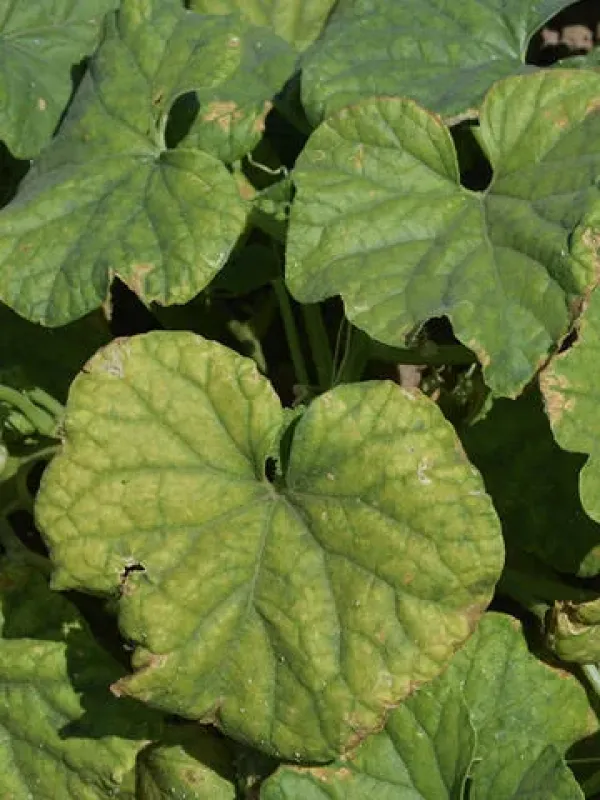
Symptoms typically begin on the older, lower leaves as interveinal chlorosis, which gradually spreads toward the younger growth.
The veins remain distinctively green while the interveinal tissue turns bright yellow. As the disease progresses, leaves may become brittle, thickened, and curled downwards.
Due to the specific chlorotic pattern, the disease is often misidentified as nitrogen or magnesium deficiency, delaying critical management steps.
Infected plants show signs of general decline, including shortened internodes and reduced vigor, which slows down the overall development of the crop.
Fruit set is drastically reduced, and the resulting fruit are small, poorly developed, and lack the flavor profile characteristic of healthy plants.
Control measures
Effective control of CCYV relies entirely on managing the whitefly population, as the virus cannot be cured once the plant is infected.
Strict sanitation protocols must be followed, including the immediate removal and disposal of infected plant material to prevent further spread.
In greenhouses, installing fine-mesh screens on vents and doors is an essential physical barrier to keep whiteflies from entering the production area.
- Monitoring the greenhouse using yellow sticky traps to detect whitefly presence early.
- Implementing an integrated pest management (IPM) program that utilizes both biological control and compatible insecticides.
- Controlling weed populations around the greenhouses, as they can host the virus and the whitefly vector.
As no resistant varieties are currently available, crop protection must focus on preventive exclusion and vector suppression to minimize disease outbreaks.
Causes diseases · 1
Discussion
No discussions yet — be the first.