
Cucumber mosaic virus
Cucumber mosaic
Cucumber mosaic virus (CMV) is a significant plant pathogenic virus, the type species of the Cucumovirus genus within the Bromoviridae family. It is recognized globally for having the broadest host range of any known plant virus.
What the section contains
Cucumber mosaic virus
The virus particles are isometric (spherical) with a diameter of approximately 29 nm. Due to its high evolutionary potential and rapid replication, CMV poses a persistent challenge in agricultural systems worldwide.
Transmission occurs primarily through aphid vectors in a non-persistent manner. This means that aphids can acquire the virus from an infected plant in just a few seconds and transmit it to a healthy plant immediately after.
Besides insect vectors, the virus is easily spread mechanically through contaminated gardening tools, equipment, and even through direct contact between infected and healthy plant foliage.
Seed transmission is possible in some host species, though it is generally considered less significant than vector-mediated spread. The virus frequently overwinters in perennial weeds and ornamental plants.
CMV infects over 1,200 species of plants, including many vital crops like cucumbers, tomatoes, peppers, spinach, beans, and various cucurbits. The damage is often systemic, affecting the entire physiological process of the plant.
Infected plants typically show severe stunting and reduced biomass production. This leads to substantial reductions in crop yield and market value, as the produce often becomes unmarketable.
Fruit quality is severely impacted; symptoms include discoloration, mottling, and irregular bumpy textures, which render the harvest unsuitable for commercial sale or processing.
In greenhouses, the impact can be devastating due to the high density of plants and the presence of aphid colonies, leading to rapid spread throughout the entire production area within a short period.
Economic losses are compounded by the fact that infected plants are more susceptible to secondary fungal and bacterial infections, further weakening the crop and shortening its productive lifespan.
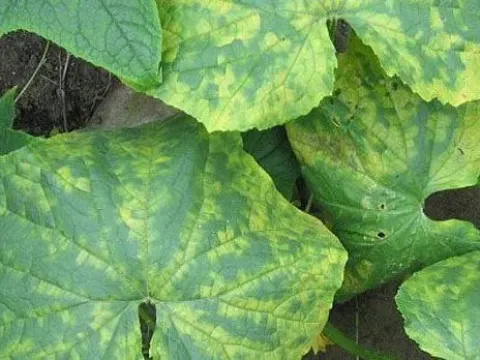
The most distinctive symptom is a mosaic pattern on the leaves, characterized by alternating patches of light green, yellow, and dark green tissue, often accompanied by leaf distortion or crinkling.
Stunting is very common, where plants appear significantly smaller than healthy ones, with shortened internodes. This gives the plant a bushy or compact appearance, particularly in tomatoes.
Filiformy, or "shoestring" symptoms, occur on tomato leaves, where the leaf blade fails to develop properly, leaving only the central vein. This drastically reduces the photosynthetic area.
Fruits exhibit mosaic mottling, wart-like protrusions, or ring patterns. In severe cases, the fruit might fail to develop entirely or drop prematurely, significantly reducing the total yield.
- Mosaic mottling on leaves.
- Leaf curling and deformation.
- Severe stunting and reduced internode length.
- Discolored or bumpy fruit surfaces.
- "Shoestring" leaf development.
Integrated pest management (IPM) is essential. The first line of defense is the rigorous removal of perennial weeds around fields and greenhouses, as these act as primary virus reservoirs during the off-season.
Controlling aphid populations is crucial. Using reflective mulches, row covers, or appropriate systemic insecticides can reduce the rate of virus transmission by limiting vector feeding activity.
Sanitation is paramount. Tools must be disinfected regularly with appropriate chemical solutions (such as milk or trisodium phosphate) to prevent mechanical transmission during routine agricultural tasks.
Utilizing certified, virus-free seeds and planting resistant or tolerant cultivars is the most effective long-term strategy for managing CMV in both home gardens and commercial operations.
Providing spatial isolation between highly susceptible vegetable crops and potential host plants can effectively delay the introduction of the virus into the production area during the critical early growth stages.