
Cryptosporiopsis curvispora
Cryptosporiopsis curvispora
Cryptosporiopsis curvispora is a fungal pathogen belonging to the order Helotiales, known primarily as the imperfect stage of Neofabraea malicorticis. It is recognized as a significant agent causing fruit rots and bark diseases in pome fruits.
What the section contains
Cryptosporiopsis curvispora
The fungus produces conidia, which are characterized by a distinct curved shape, serving as a primary morphological identifier. These spores are essential for the dispersal of the pathogen during wet conditions in orchard environments.
Systematically, it is a filamentous fungus that resides within the host tissue, often forming dormant structures in the bark of infected trees. Its growth rate is generally moderate, allowing it to survive various environmental stresses.
The disease cycle is strongly influenced by local climatic conditions. Rain splash is the primary vector for conidia distribution, moving the fungus from bark lesions to the developing fruit surface, where infection occurs.
Overwintering of the pathogen occurs predominantly in the bark lesions or mummified fruits left in the orchard. As spring approaches, the fungus resumes activity, producing new cycles of conidia to initiate infections for the current season.
The primary hosts for this pathogen are apple trees, although it may occasionally affect pears. The damage is twofold, impacting both the structural integrity of the tree and the marketability of the fruit.
On the bark, the fungus causes necrotic lesions, often referred to as cankers. These lesions can expand over years, potentially girdling branches and leading to the decline or death of affected limbs.
Fruit decay, often termed pit rot, is the most economically damaging aspect of this pathogen. Infections often remain latent until the fruit enters storage, where the fungus progresses and causes significant quality losses.
The disease reduces the yield and shortens the shelf life of the harvest. In severe outbreaks, the presence of these fungal colonies can make entire batches of fruit unsuitable for international trade or long-term storage.
Furthermore, the pathogen predisposes the tree to secondary infections by other opportunistic organisms. This cumulative stress weakens the orchard's overall productivity and increases the maintenance costs for the grower.
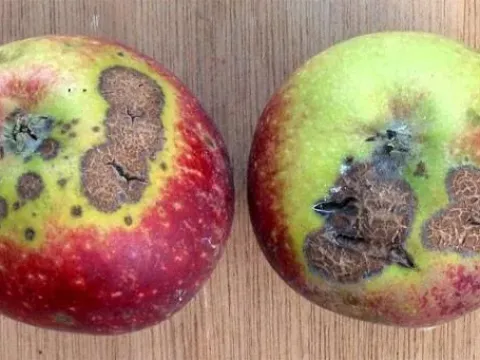
Initial symptoms on fruits appear as small, slightly sunken, circular lesions. These lesions often have a darker color than the surrounding healthy skin, and as they progress, they deepen into characteristic pits.
Visible sporulation structures, appearing as creamy or yellowish cushions, may develop in the center of the pits. These structures are clear indicators of active fungal growth, especially in high-humidity storage conditions.
Bark cankers are observed as depressed, discolored areas of bark that often crack as the lesion matures. Underneath the cracked bark, the wood may exhibit signs of rot, confirming the presence of the pathogen.
Internally, infected fruit tissue displays a firm, brownish rot. Unlike other soft rots, the texture remains somewhat intact, but the flavor is typically compromised, becoming noticeably bitter due to fungal toxins.
In cold storage, the development of these symptoms can be slow but progressive. Regular inspections of stored fruit often reveal an increase in the size of the pits as the fungus spreads through the affected tissues.
Sanitation is the cornerstone of control. Pruning out infected wood and removing mummified fruits from the orchard significantly reduces the inoculum pressure for the next season.
Fungicide applications, specifically those targeting the pre-harvest period, are critical. Protecting the fruit from spores during the weeks leading up to the harvest helps prevent latent infections that manifest during storage.
Post-harvest management involves rapid cooling of fruits to temperatures near 0°C. This practice is essential to inhibit the growth rate of the pathogen and extend the storage life of the produce.
Orchard design and maintenance, including proper pruning for adequate airflow, help reduce moisture retention on fruits and branches. This makes the environment less conducive to fungal infection.
Monitoring and controlling pest populations that cause skin damage is equally important, as injuries provide direct entry points for the pathogen. Maintaining tree vigor through balanced nutrition further enhances natural resistance.