
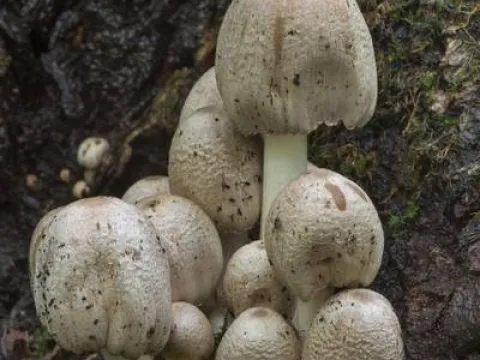
Coprinopsis psychromorbida
Coprinopsis psychromorbida
Coprinopsis psychromorbida is a psychrophilic basidiomycete fungus that serves as a primary agent responsible for snow mold diseases in winter crops.
What the section contains
Coprinopsis psychromorbida
Taxonomically, it belongs to the Kingdom Fungi, Phylum Basidiomycota, Class Agaricomycetes, and Order Agaricales.
The fungus is characterized by its remarkable ability to grow and thrive in cold, moist environments, specifically at temperatures hovering around the freezing point.
It does not typically produce traditional, large mushroom fruiting bodies in field conditions, growing instead as an extensive mycelial network.
Identification is most commonly achieved through the presence of white or grayish mycelium on plant debris and overwintering crops immediately after snowmelt.
The host range of Coprinopsis psychromorbida primarily includes winter cereals such as winter wheat, winter rye, and winter barley.
It also acts as a significant pathogen for forage grasses in pastures and meadows, impacting the productivity of livestock feed sources.
The fungus attacks the leaf blades, stems, and crown tissue, leading to the necrosis of these vital plant parts.
In cases of severe infection, the crown of the plant is destroyed, which prevents the crop from initiating spring regrowth and leads to plant death.
Economic damage is manifested through decreased stand density, reduced yield potential, and the necessity to reseed fields in the spring.
The pathogen's life cycle is strictly synchronized with winter conditions, favoring long periods of snow cover that insulate the soil.
Optimal development occurs when soil temperatures remain stable between -5 and +5 degrees Celsius under a persistent snow pack.
Infections often spread during the late winter and early spring period as the snow cover begins to melt and soil moisture levels rise.
During the summer, the fungus survives as mycelium within plant residues or in the soil, entering a quiescent state until winter conditions return.
The fungus is especially prevalent in regions with long, snowy winters where moisture is trapped at the soil surface, providing a perfect incubation medium.
The most visible symptom is the appearance of white or gray fungal growth on winter crops as soon as the snow melts in the spring.
- Patches of dead or decaying plants appear on the field.
- Lesions on the leaves often exhibit a blighted, water-soaked appearance.
- The crown of the plant may become soft and rotted, showing evidence of mycelial colonization.
- Tissues turn brown and brittle as the plant tissue dies completely during the latent winter infection stage.
- Affected areas of the field often fail to turn green when temperatures rise, indicating systemic death.
Cultural practices, such as crop rotation, are essential to prevent the buildup of fungal inoculum in the field over consecutive seasons.
The selection and planting of winter-hardy, disease-resistant crop varieties are the most effective long-term strategies for managing snow mold.
Field management should focus on avoiding excessive nitrogen application in the fall, which can promote lush growth and increase susceptibility to the fungus.
The application of systemic fungicides in the autumn, prior to the arrival of permanent snow cover, can significantly reduce the severity of the infection.
Proper field drainage and avoiding low-lying areas where water can accumulate can help create an environment less favorable for the fungus.