
Coral spot
Nectria cinnabrarina
Description
How to identify
Coral spot (Nectria cinnabrarina) is an ascomycete fungus that causes a common bark disease in a wide range of woody plants and shrubs.
The fungus is well-known for its two-stage life cycle: the conidial stage (formerly Tubercularia vulgaris) and the sexual stage with distinct orange-red perithecia.
It acts as a facultative parasite, meaning it predominantly survives as a saprotroph on deadwood but quickly colonizes weakened living tissues when environmental conditions allow.
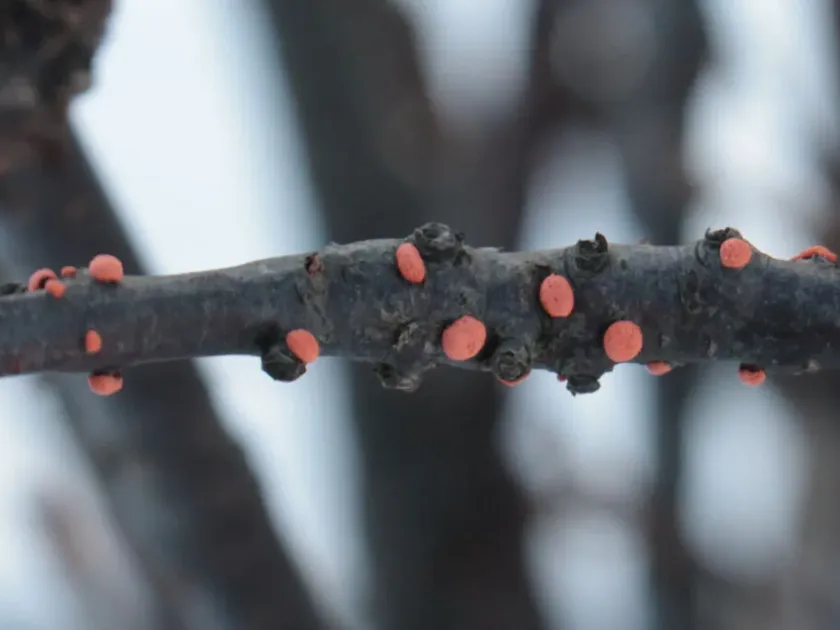
Identification is primarily based on the presence of small, coral-red cushion-like structures that emerge through the bark of infected branches or trunks.
These fungal structures act as the source of spores, which are spread primarily by splashing rain, wind, and contaminated pruning equipment.
What it damages
This pathogen poses a significant threat to various landscape trees and fruit-bearing species, including apple, pear, cherry, currant, and maple trees.
The fungus targets trees that are already suffering from environmental stress, such as frost cracks, sunburn, drought, or inadequate nutrient intake.
Once inside, the mycelium spreads through the cambium layer, effectively cutting off the tree's vascular supply and causing localized dieback.
As the disease progresses, the infected parts of the crown wilt and die, leading to the condition often described as branch dieback or branch necrosis.
Without proper management, severe infestations can lead to the systemic decline of the entire host plant, significantly reducing its vitality and productivity.
When it appears
Coral spot is highly active throughout the growing season, particularly during periods of mild temperatures and high atmospheric humidity.
In spring, following winter dormancy, the fungus begins to colonize susceptible wood tissues rapidly, producing visible conidial spore masses.
Summer months often see the development of the internal mycelium, which continues to weaken the tree's structural integrity behind the bark.
Autumn is the peak season for the formation of sexual fruiting bodies, as the increased rainfall facilitates the dispersal of spores to new, vulnerable sites.
The pathogen remains viable over winter within the host's bark, allowing it to persist in the environment even after the host foliage has fallen.
Signs of infestation
The most diagnostic feature is the sudden appearance of numerous bright orange or coral-red pustules on the bark of dying or dead branches.
The bark itself usually becomes discolored, sunken, and may eventually peel away from the underlying wood as the disease progresses.
- Yellowing and premature wilting of leaves during the growing season.
- Brittle, dry wood structure in the affected branch areas.
- Formation of dark, necrotic lesions beneath the infected bark.
- Gradual dieback starting from the tips of the branches downwards.
These signs are most prominent on branches that have recently suffered from pruning wounds or environmental damage, providing easy entry points.
If the bark is removed, the wood underneath may appear discolored, confirming that the fungal mycelium has penetrated deeply into the vascular tissue.
Control measures
Pruning is the primary method of control; all infected branches must be removed, cutting well back into healthy tissue to ensure complete removal of the fungus.
Sterilizing pruning tools with alcohol or a strong disinfectant between cuts is crucial to prevent the spread of spores to healthy parts of the tree.
All prunings must be disposed of correctly, preferably by burning, to eliminate the reservoir of fungal spores from the garden environment.
Maintaining overall tree health through proper fertilization, adequate watering, and protection against sunscald is essential to prevent future outbreaks.
In cases of severe infestation, the application of copper-based fungicides can help protect remaining healthy tissues from new spore infections.
Causes diseases · 1
Discussion
No discussions yet — be the first.