
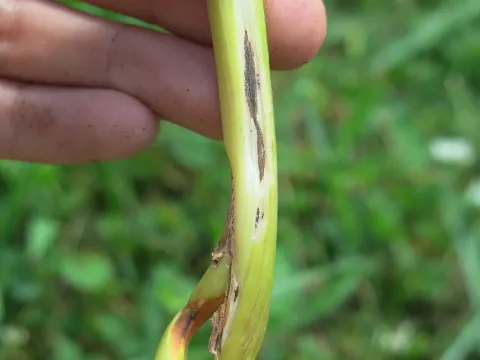
Colletotrichum fioriniae
Colletotrichum fioriniae
Colletotrichum fioriniae is a plant pathogenic fungus belonging to the kingdom Fungi and the phylum Ascomycota. It is a key member of the Colletotrichum acutatum species complex, widely recognized for its high impact on horticultural crops.
What the section contains
Colletotrichum fioriniae
This pathogen possesses a broad host range, infecting various species, most notably pome fruits, stone fruits, and strawberries, causing significant economic losses globally.
The fungus produces asexual spores called conidia within acervuli, which are saucer-shaped fruiting bodies. These conidia are the primary propagules for spreading the disease within plant populations.
Due to its high morphological similarity to other related species, C. fioriniae is typically identified using advanced molecular techniques, such as DNA sequence analysis of the ITS region or specific genes.
It acts as a facultative parasite, meaning it can survive as an endophyte or a saprophyte on plant debris, ensuring its survival even in the absence of a primary host plant.
The primary damage caused by C. fioriniae is the development of anthracnose, which manifests as necrotic lesions on fruits, leaves, and stems of host plants.
On fruits, the disease begins as small, water-soaked spots that rapidly expand, leading to firm, depressed, dark-colored lesions that make the produce unmarketable.
The fungus can also cause blighting of blossoms and young shoots, reducing the overall fruit set and weakening the health of the entire plant structure.
In post-harvest scenarios, latent infections can activate, leading to rapid rotting of fruits during storage and transport, causing substantial financial harm to growers and retailers.
The pathogen's ability to infect multiple parts of the plant often results in reduced vigor, smaller fruit size, and a significant decrease in overall yield quality.
Infection cycles are largely dependent on environmental conditions, specifically warmth and high humidity levels during the active growing season of the host crops.
Heavy rainfall, prolonged morning dew, and high ambient temperatures (ideally between 20°C and 25°C) create the perfect environment for the pathogen's development and spread.
Conidia are dispersed through splashing rain, irrigation water, and sometimes by insect vectors that move between healthy and diseased plant parts.
The pathogen overwinters in plant tissues, such as mummified fruits, dead twigs, or even in the soil, emerging when conditions become favorable in the following spring.
Post-harvest storage environment is also a critical season for the pathogen if temperature control is not strictly maintained, allowing for continuous spread between fruits in storage bins.
Initial signs include the appearance of small, round, light-colored spots that soon turn brown or black, becoming sunken into the flesh of the fruit.
As the infection progresses, concentric rings develop within the lesions, which are often covered with slimy masses of conidia, typically appearing pink, orange, or cream in color.
Blighting of blossoms and the drying of terminal shoots are common signs in orchards, often appearing after periods of wet and warm weather.
Infected fruit tissue often exhibits a bitter taste (specifically in apples) and a soft, spongy texture as the rot permeates deeper into the fruit flesh.
- Sunken, dark lesions on fruit surfaces.
- Pink or orange spore masses on infected tissue.
- Blighted blossoms and leaf necrosis.
- Pre-mature fruit drop and rotting in storage.
Integrated pest management (IPM) is essential, starting with strict sanitation practices like the removal and destruction of all infected plant materials to reduce the inoculum load.
Pruning trees to improve air circulation and sunlight penetration is an effective cultural practice that limits the moisture favorable to fungal colonization.
The application of registered fungicides at critical growth stages, particularly during blooming and fruit set, provides significant protection against primary infections.
Using drip irrigation instead of overhead sprinklers helps keep foliage dry, directly interfering with the pathogen's ability to germinate and infect.
Post-harvest storage management, including rapid cooling of fruits and the use of clean storage facilities, is vital to prevent the spread of latent infections that might cause losses.