
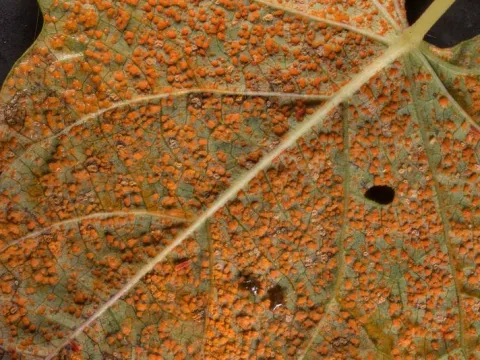
Coleosporium ipomoeae
Coleosporium ipomoeae
Coleosporium ipomoeae is an obligate parasitic fungus, classified within the phylum Basidiomycota and the class Pucciniomycetes. It is specifically recognized as a rust fungus that targets plants of the Ipomoea genus.
What the section contains
Coleosporium ipomoeae
As an obligate pathogen, it relies entirely on the living tissues of its host plant to complete its lifecycle. It lacks the ability to thrive as a saprophyte on dead or decaying organic matter.
The fungus produces distinct reproductive structures known as uredinia, which erupt through the epidermis of the host leaves. These structures release thousands of microscopic spores into the air.
Systemically, it is a highly specialized fungus that thrives in warm and humid environments, typical for the native habitats and cultivated zones of Morning Glory.
Identification relies on microscopic examination of spores and the observation of macro-symptoms on the foliage, which are consistent with the characteristic behavior of the Coleosporium genus.
The primary host for this pathogen is Morning Glory (Ipomoea), a popular ornamental climber. When infected, the plant suffers significant physiological stress.
The fungus colonizes the leaves, disrupting photosynthesis and depleting the nutrients necessary for healthy vegetative growth and abundant flowering.
Severe infestations result in heavy leaf drop, which significantly diminishes the aesthetic appeal of the ornamental plant and can stunt its overall growth rate.
In addition to direct damage, the infected plants become highly susceptible to environmental stresses and secondary pathogens that take advantage of the host's weakened immune system.
In nursery or dense landscape settings, the spread of this fungus can be rapid, leading to substantial losses in plant quality and marketability.
The initial infection presents as small, pale chlorotic spots on the adaxial (top) side of the leaves, which gradually increase in size over time.
The most diagnostic feature is the appearance of bright orange to yellow pustules on the abaxial (bottom) side of the leaves, representing the spore-producing uredinia of the fungus.
As the disease progresses, the leaves turn yellow and eventually brown, leading to necrotic spots and premature abscission of the foliage from the stems.
In highly favorable conditions, such as high humidity and moderate temperatures, the entire leaf surface may become covered in pustules, severely hindering the plant's metabolism.
- Small yellow or pale spots on the upper leaf surface.
- Bright orange/yellow pustules on the underside of leaves.
- Yellowing and premature death of the foliage.
- Significant loss of leaves, leading to sparse or bare stems.
- Reduced flower production due to loss of leaf area.
Sanitation is the first line of defense; promptly removing and destroying infected leaves helps to reduce the primary inoculum load within the garden environment.
Promoting good air circulation around the plants through proper spacing is essential to prevent the micro-climatic conditions that favor fungal spore germination.
Systemic fungicides, particularly those containing triazoles or strobilurins, are highly effective in managing the disease and stopping the internal spread of the fungal mycelium.
Watering practices should focus on keeping the foliage dry, as moisture on the leaves is a critical factor in the infection process for most rust fungi.
Preventative applications of fungicides during periods of high humidity can provide significant protection for healthy plants, particularly in areas where the disease is known to be prevalent.