
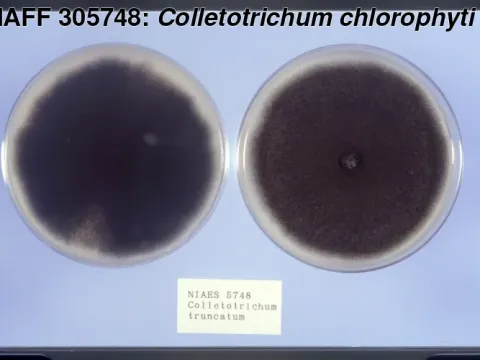
Colletotrichum chlorophyti
Colletotrichum chlorophyti
Colletotrichum chlorophyti is a microscopic filamentous fungus belonging to the phylum Ascomycota. It is recognized as a significant plant pathogen responsible for causing anthracnose-type diseases in various plant species, with a particular affinity for members of the Chlorophytum genus.
What the section contains
Colletotrichum chlorophyti
The fungus is classified under the order Glomerellales. Its taxonomic identity is defined by the production of characteristic asexual structures known as acervuli, which facilitate the rapid spread of the disease through the release of conidia (spores).
The biological cycle of this pathogen involves both saprotrophic and parasitic phases. It can survive as mycelium or as dormant spores within plant debris or soil, allowing it to persist across different growing seasons until favorable conditions arise.
Upon infection, the fungus secretes a range of cell-wall-degrading enzymes that break down host tissue. This biochemical strategy allows the pathogen to penetrate deep into the plant's vascular system and parenchyma cells.
Genetic diversity within the species enables it to adapt to varying environmental conditions, making it a persistent challenge for plant breeders and agricultural producers who struggle to maintain pathogen-free nursery environments.
While the pathogen is named after its primary host, the spider plant (Chlorophytum comosum), its host range extends to several other ornamental and agricultural crops. It thrives by attacking foliage, stems, and fruits, causing substantial structural damage.
The primary damage results from the destruction of leaf tissue, which drastically reduces the photosynthetic capacity of the plant. This loss leads to stunted growth, reduced yields, and poor overall health of the affected crop.
Stem infections are particularly dangerous, as they can cause systemic vascular dysfunction, leading to rapid wilting and, in severe cases, the complete collapse and death of the plant specimen.
In addition to growth impairment, the infection significantly degrades the commercial value of plants. Foliar spots, necrotic lesions, and premature defoliation render decorative plants unsellable and lower the quality of agricultural produce.
The economic impact is amplified by the high costs of frequent fungicide applications and the labor-intensive requirements for pruning and destroying heavily infected plants within large-scale operations.
The development of Colletotrichum chlorophyti is heavily dependent on moisture. High relative humidity and warm temperatures (ranging from 20°C to 28°C) create the optimal environment for spore germination and active fungal colonization.
The pathogen is particularly problematic in greenhouse environments where microclimates with stagnant air and constant humidity facilitate continuous disease cycles throughout the year.
Secondary spread occurs primarily through water splashing, which disperses conidia from infected to healthy tissue. Furthermore, insects such as aphids or thrips can act as mechanical vectors, spreading the fungal spores during feeding activities.
Primary infection often occurs during periods of intense growth or high rainfall, when plant tissues are more susceptible to penetration. Once established, the pathogen produces secondary cycles of inoculum that can lead to rapid disease flare-ups.
The fungus is highly resilient, and its spores can survive periods of heat or dry weather, remaining quiescent until conditions improve, at which point they quickly resume development and sporulation.
The earliest symptom of infection appears as small, irregular spots on the leaf surface that are usually light brown to tan in color. As the infection progresses, these spots expand in size and often merge into large necrotic areas.
A distinctive feature of this pathogen is the appearance of tiny, dark-colored acervuli within the lesions. These are often arranged in concentric circles and serve as a vital diagnostic indicator for anthracnose diseases.
Heavily infected leaves tend to turn chlorotic, curl, and drop prematurely. On stems and petioles, the pathogen creates sunken, dark-colored lesions or cankers that weaken the structural integrity of the plant.
During periods of high humidity, a characteristic pinkish or greyish slimy mass of spores may be visible on the surface of the lesions. This signifies the presence of active conidiation, indicating the peak of the disease's infectivity.
The overall plant appearance reflects a decline in vigor, with signs of general stress, including reduced vitality, poor color, and a cessation of normal development in infected branches or leaves.
Effective management begins with strict sanitation practices, including the removal and destruction of all infected plant materials. This reduces the primary inoculum source that would otherwise persist for subsequent seasons.
Optimizing the growing environment is crucial; this includes ensuring proper plant spacing to improve airflow and strictly regulating humidity levels. Avoid overhead irrigation, as water films on leaves facilitate rapid spore movement and germination.
Fungicidal control should be integrated as a preventive measure in high-risk environments. Systemic fungicides containing triazoles or strobilurins have shown efficacy in suppressing the development of the fungal mycelium.
Resistance management is vital in agricultural settings; producers should rotate fungicides with different modes of action to prevent the pathogen from developing genetic immunity to specific chemical compounds.
Continuous monitoring of plants, especially during humid weather, allows for early detection. Prompt removal of the first infected leaves can often contain the disease and prevent it from spreading throughout the entire crop.