
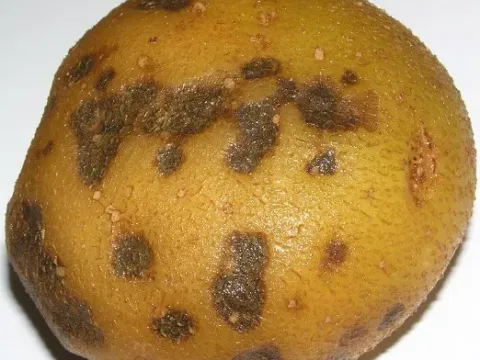
Colletotrichum coccodes
Colletotrichum coccodes
Colletotrichum coccodes is a soil-borne fungal pathogen belonging to the Ascomycota division. It is the primary causal agent of anthracnose and black dot root rot in various solanaceous crops.
What the section contains
Colletotrichum coccodes
The fungus is characterized by the production of microsclerotia—small, black, resilient structures that allow it to survive in soil for several years without a host plant.
In the presence of moisture, the fungus produces acervuli, which are specialized structures that generate masses of conidia. These spores are easily disseminated by water splashes and irrigation.
The taxonomy of this species is complex, with various isolates showing different degrees of virulence. It acts as a hemibiotroph, initially feeding on living tissue before causing necrotic decay.
Its ability to persist on crop debris and in the soil makes it a significant challenge for sustainable agricultural production systems worldwide.
The pathogen primarily affects potatoes and tomatoes. Other hosts include peppers, eggplants, and several common weeds within the Solanaceae family.
Root damage is a hallmark of this disease. As the root system decays, the plant loses its ability to absorb water and nutrients, leading to progressive wilting and yield loss.
Fruit infection, specifically in tomatoes, results in circular, sunken lesions that rapidly expand, making the fruit completely unmarketable and prone to secondary rot.
Systemic infection in the vascular tissue can weaken the stem, causing premature senescence of the entire plant before the harvest cycle is complete.
Economic impact is severe, as the disease not only reduces total crop weight but also significantly downgrades the quality of the produce, leading to substantial financial losses.
Warm and moist conditions are ideal for the development of C. coccodes. The fungus thrives at soil temperatures between 20°C and 28°C.
High humidity and rainfall facilitate the secondary spread of spores. Rainy seasons often trigger rapid disease outbreaks in fields with dense canopy cover.
The infection process is most intense during the reproductive stage of the host plant, when the plant's resources are being diverted toward fruit development.
During the off-season, the pathogen remains dormant in the soil or on crop residue. Its survival is enhanced by mild winters and poor soil drainage.
Proper timing of field operations is crucial; disturbance of infected soil during moist conditions often promotes the spread of spores to healthy plant parts.
Symptoms often appear as yellowing of the lower foliage, which progresses upward. Infected plants often show signs of wilting during the hottest part of the day.
Root and stem bases show dark, necrotic spots. Upon closer inspection, these spots are peppered with tiny, black, dot-like microsclerotia, giving the disease its common name.
Fruit lesions are distinct; they are circular, sunken, and often exhibit a dark center where the conidial mass develops under humid conditions.
Internal stem discoloration and a thinning of the root cortex are common internal symptoms that indicate the pathogen has successfully colonized the host tissue.
- Yellowing and premature wilting of foliage.
- Sunken, dark lesions on fruits and stems.
- Characteristic black dots (microsclerotia) on infected surfaces.
- Root necrosis and stunted plant growth.
- Reduced fruit size and quality.
Integrated Pest Management (IPM) is essential. Crop rotation using non-host species for at least three to four years is the most effective cultural practice to reduce inoculum levels.
Sanitation is critical; removing and destroying infected plant debris reduces the amount of overwintering inoculum in the field for the next growing season.
Application of fungicides, particularly those containing copper or strobilurin compounds, can provide effective protection if applied preventively during the season.
Improving soil drainage and optimizing irrigation practices to prevent water stagnation help minimize the conditions that favor fungal infection and spore dispersion.
Maintaining soil fertility and managing soil-borne pests like nematodes can enhance host vigor, making the plants more resilient to C. coccodes infection.