
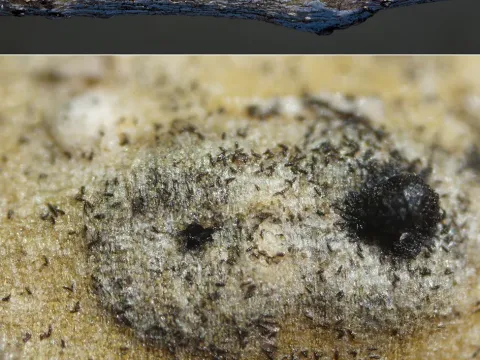
Splanchonema platani
Splanchonema platan
Splanchonema platani is an ascomycetous fungus belonging to the Pleosporales order, known as a specific pathogen of plane trees (Platanus species).
What the section contains
Splanchonema platani
The fungus develops within the bark tissues, creating stroma structures that eventually rupture the epidermal layer to release its spores.
As a specialized pathogen, it exploits the natural weaknesses in the bark of mature trees, often following environmental stressors.
Taxonomically, it is classified within the Pleosporaceae family and is recognized for its role in causing branch dieback in ornamental plantings.
Scientific research identifies this fungus as a significant factor in the decline of plane trees in urban ecosystems where trees face constant environmental pressure.
The primary hosts of this pathogen are various species of plane trees, commonly found in urban landscaping and municipal forestry.
The fungus affects twigs and branches, inducing bark necrosis that disrupts the vascular flow within the affected woody tissues.
When the infection rings the branch, the distal parts of the tree fail to receive water and nutrients, leading to rapid wilting and branch death.
Over time, the cumulative effect of the fungal infection reduces the tree's vigor and structural integrity, posing risks in high-traffic pedestrian areas.
If left unmanaged, the infection can spread throughout the crown, severely affecting the aesthetic value and ecological health of the trees.
Infection is often signaled by small pustules on the bark surface, which indicate the development of fruiting bodies beneath the outer layer.
As the disease progresses, the bark becomes necrotic, cracked, and brittle, revealing the underlying woody tissue to potential secondary infections.
Localized browning or premature wilting of foliage on specific branches is a clear indicator that the branch's vascular system has been compromised.
During humid conditions, spores may emerge from the rupture points, creating a visible darkened surface layer on the affected branch.
Long-term signs include dieback of the crown tips and the emergence of dead, brittle wood which is prone to breaking during windy periods.
The most effective management strategy is the prompt removal of infected branches, cutting back at least 20 cm into healthy tissue.
Sanitation is critical; all pruned material should be disposed of by burning or deep burial to eliminate the fungal inoculum from the area.
Protective fungicides containing copper can be used as a preventative measure to cover susceptible tissues and reduce the incidence of infection.
Maintaining tree health through adequate irrigation and nutrient management helps trees develop higher resistance against fungal attacks.
- Regular sterilization of pruning tools with alcohol to prevent cross-contamination.
- Consistent monitoring of plane tree crowns for early signs of bark abnormalities.
- Application of specialized wound dressings to pruning sites to support healing.