
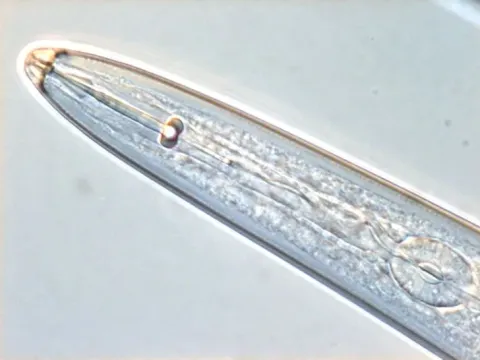
Spiral nematode
Helicotylencus
The spiral nematode, belonging to the genus Helicotylenchus, is a significant plant-parasitic nematode within the Hoplolaimidae family. They are known for their characteristic spiral shape when dead or dormant.
What the section contains
Spiral nematode
These nematodes act primarily as ectoparasites, feeding on the roots of plants from the outside, though they can sometimes penetrate the epidermal cells of the root system.
The life cycle includes the egg stage, four larval stages, and the adult stage. The development is highly dependent on soil moisture and temperature, thriving in warm, well-aerated soils.
They are microscopic organisms that do not cause visible swellings on roots, which makes them difficult to identify without professional soil sampling and laboratory analysis.
Dissemination often occurs via the movement of infested soil on farm machinery, irrigation water, and the transport of infected plant nursery stock.
Helicotylenchus species attack a wide range of host plants, including grasses, cereals, ornamental crops, vegetables, and fruit trees, causing significant agricultural losses.
By using their specialized stylet to puncture root cells, they drain nutrients, which directly impacts the plant's ability to maintain healthy growth and physiological functions.
The feeding activity creates necrotic lesions on the roots. These wounds also serve as entry points for secondary fungal and bacterial infections, compounding the damage to the root system.
Symptoms often manifest as stunting, chlorosis, and reduced vigor in plants. In severe cases, the entire crop may show uneven growth and significant yield decline.
The economic impact of spiral nematodes is often underestimated because the symptoms are frequently misdiagnosed as nutrient deficiencies or general moisture stress.
The primary field sign is the presence of irregular, patchy areas of stunted or yellowing plants that do not respond to fertilization or standard watering practices.
Plants may exhibit premature wilting during periods of peak heat, as their compromised root systems struggle to provide adequate water to the foliage.
Upon examination, the root systems of infected plants appear sparse, with evidence of browning and localized tissue decay, contrasting with the healthy root mass of neighboring plants.
Laboratory diagnosis is essential to confirm the presence of spiral nematodes. Technicians extract the nematodes from soil or root samples to count populations and determine the species.
Long-term field observation often reveals a gradual decrease in plant performance in areas where populations of Helicotylenchus have established.
Crop rotation is one of the most effective cultural control methods. Planting non-host crops can significantly reduce the nematode population density in the soil over time.
The use of certified, clean planting material is critical to prevent introducing the parasite into uninfested fields or greenhouse environments.
Implementing strict hygiene practices for farm machinery, such as cleaning equipment before moving between fields, prevents the spread of soil-borne nematodes.
Chemical control involving nematicides should be used judiciously, based on economic thresholds and following local safety and environmental regulations.
Soil monitoring and integrated pest management (IPM) strategies provide the most sustainable way to keep spiral nematode populations below levels that cause crop damage.