
Citrus leprosis
Citrus leprosis
Citrus leprosis is a destructive viral disease affecting citrus trees worldwide. It is caused by a complex group of viruses, including members of the Cilevirus, Higrevirus, and Dichorhavirus genera.
What the section contains
Citrus leprosis
The virus is exclusively transmitted by false spider mites of the genus Brevipalpus, particularly Brevipalpus yothersi. The mite acquires the virus from infected plants and carries it for life.
Unlike many other plant viruses, citrus leprosis is not transmitted by mechanical sap inoculation or through contaminated tools. It is strictly dependent on the mite vector for spread.
The pathogen causes localized lesions on plant tissues. It is considered a significant quarantine pest in many citrus-producing regions, necessitating strict regulatory oversight.
Diagnostic confirmation involves detecting the virus using molecular techniques like RT-PCR, as symptoms may mimic those caused by other fungal or bacterial leaf spot diseases.
The disease affects a wide range of citrus species, including sweet orange (Citrus sinensis), which is highly susceptible, as well as mandarins, lemons, and grapefruits.
The primary damage is caused by premature fruit drop and leaf abscission. In severe cases, the entire harvest can be lost, and the tree becomes chronically weak.
Bark lesions result in twig dieback, which limits the tree's photosynthetic capacity and hinders the flow of nutrients, leading to long-term decline in vigor.
Citrus leprosis significantly reduces the commercial quality of citrus fruit. Even if fruit remains on the tree, the lesions make it unsuitable for fresh market sale.
Economic impact is massive, forcing growers to invest heavily in chemical mite control and frequently replanting severely infested orchards.
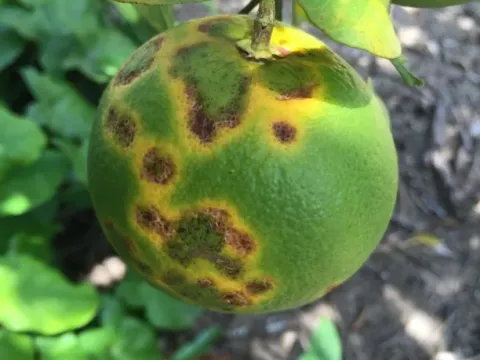
Initial symptoms are characterized by localized chlorotic lesions on leaves, stems, and fruits. These spots often develop a brown, necrotic center as the disease progresses.
On fruits, the lesions manifest as necrotic rings, often with a yellow halo. These spots are firm and do not rot internally but make the appearance unacceptable for sale.
Bark lesions appear as shallow, irregular, and sometimes cracked spots on the stems. In chronic cases, the stems become hardened, deformed, and lose their flexibility.
Leaves exhibit irregular yellowing and eventually detach from the tree. This leaf fall leads to a sparse canopy, which exposes the tree to sunburn and further reduces yield.
- Circular necrotic lesions on fruit skin.
- Premature dropping of leaves and fruit.
- Twig dieback and rough, cracked bark.
- Yellow halo around necrotic spots on foliage.
Management of citrus leprosis relies heavily on the control of the mite vector. Regular applications of acaricides are necessary to keep Brevipalpus populations below the economic threshold.
Pruning out and incinerating infected twigs is a crucial sanitation practice. This significantly reduces the viral load within the orchard environment.
Using pathogen-free, certified nursery stock is the foundation of preventing the introduction of the virus into new, clean areas.
Implementing quarantine procedures and ensuring that equipment and personnel do not move mites from infested to healthy orchards is vital for containment.
Integrated Pest Management (IPM) strategies, which combine chemical control with the promotion of natural mite predators, are becoming the standard for long-term sustainable production.