
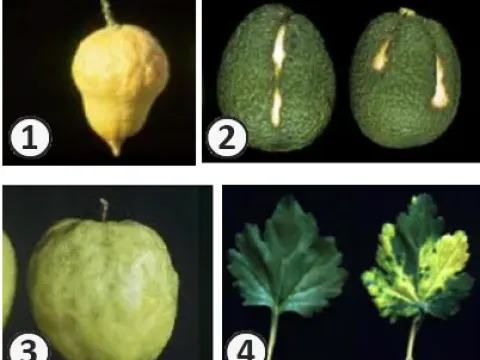
Citrus dwarfing viroid
Citrus dwarfing
The Citrus dwarfing viroid (CDVd) is a member of the Pospiviroidae family and the Apscaviroid genus. It consists of a single-stranded, circular RNA molecule that lacks any protein capsid.
What the section contains
Citrus dwarfing viroid
As a subviral pathogen, it relies entirely on host machinery for replication and systematically spreads throughout the tree's vascular system, specifically via the phloem.
CDVd is transmitted primarily through vegetative propagation, such as grafting with infected scion wood, and through contaminated pruning tools.
Unlike many viruses, this viroid is not transmitted by insect vectors like aphids or whiteflies, making its spread manageable through human activities.
Laboratory diagnosis via molecular assays, including RT-PCR and nucleic acid hybridization, is essential as symptomless infections are common in certain hosts.
The viroid primarily infects various citrus species and their rootstocks, causing significant economic losses in commercial citrus production worldwide.
The main symptom, as the name implies, is severe stunting. Infected trees fail to reach their full potential size, resulting in reduced orchard productivity.
Damage also manifests as poor fruit quality, including reduced fruit size and lower juice content, which significantly lowers the market value of the crop.
In certain graft combinations, the infection causes physiological incompatibility between the scion and the rootstock, leading to long-term decline.
Chronic infection weakens the tree's overall vigor, making it more susceptible to environmental stress factors like drought or thermal extremes.
Visible stunting is the most characteristic sign, where infected trees appear significantly smaller than healthy trees of the same variety planted at the same time.
Foliar symptoms may include chlorosis, leaf curling, or a general reduction in leaf size, which often interferes with the tree's photosynthetic capability.
Some citrus varieties may show bark scaling, cracking, or gumming near the graft union, which are indicative of severe physiological distress.
Yield loss is significant, as the trees produce fewer and smaller fruits, and the harvest frequency becomes erratic or completely suppressed.
- Noticeable reduction in tree height and canopy volume.
- Chlorotic and deformed foliage.
- Significant decrease in fruit size and number.
- Bark lesions and graft union abnormalities.
The most effective strategy is the use of certified pathogen-free budwood, which has been rigorously tested and cleaned via meristem tip culture.
Strict sanitation protocols for pruning and grafting tools are crucial; instruments must be disinfected with bleach or alcohol between individual trees.
Implementing a regular scouting program to identify and rogue symptomatic trees is necessary to minimize the reservoir of the viroid in the orchard.
Quarantine regulations should be strictly followed to prevent the movement of non-tested citrus materials into healthy or disease-free areas.
Integrated management should prioritize maintaining high tree vigor through proper irrigation and nutrition to help trees withstand the sub-clinical effects of the viroid.