
Citrus Sudden Death
Citrus sudden
Description
How to identify
Citrus Sudden Death (CSD) is a severe agricultural disorder that primarily affects citrus trees grafted onto the Rangpur lime (Citrus limonia) rootstock.
The causal agent is identified as the Citrus sudden death-associated virus (CSDaV), classified within the Tymoviridae family.
This pathogen aggressively attacks the vascular system, specifically the phloem, causing systemic blockage that prevents vital nutrient flow.
Scientific research indicates that the disease acts as a complex interaction between the virus and the specific physiology of the Rangpur lime rootstock.
It remains one of the most significant challenges for citrus growers globally due to its rapid progression and lethal impact on mature trees.
What it damages
The primary damage occurs in the vascular tissue, which leads to the starvation and dehydration of the entire canopy of the infected tree.
Commercial orchards suffer massive financial losses, as entire blocks of fruit-bearing trees can decline within a single season.
The fruit quality drops significantly, often before the visible wilting of the leaves, making early detection extremely difficult.
The disease effectively eliminates the productivity of an orchard, requiring the total removal of affected trees to prevent potential spread.
Younger trees may also be affected, but the most dramatic decline is observed in mature trees that have reached their peak production cycle.
Signs of infestation
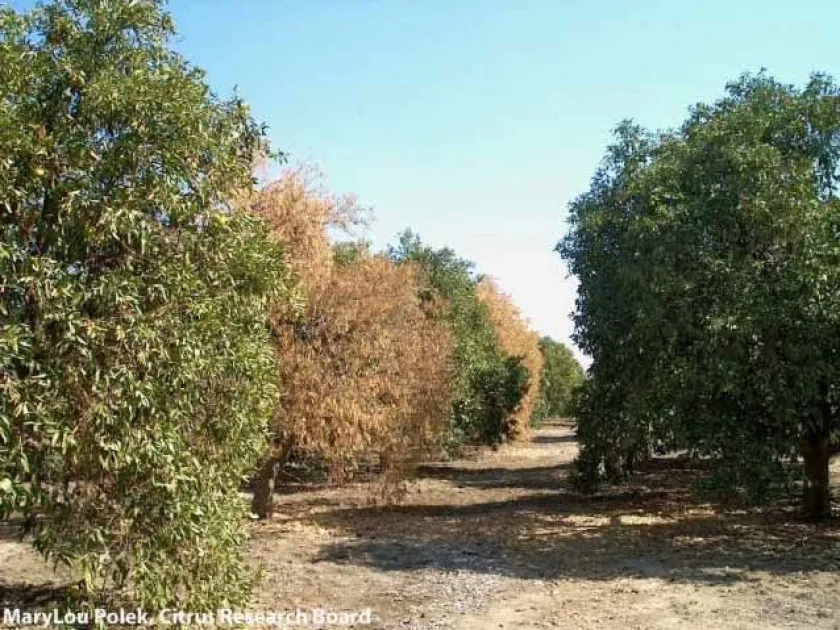
The most prominent symptom is the rapid yellowing and subsequent wilting of the entire foliage, often occurring within a very short timeframe.
Internal examination reveals a characteristic necrosis of the bark and cambium layer specifically at the union point of the graft.
Roots show severe signs of decay and rootstock decline, which essentially cuts off the water supply to the upper parts of the plant.
Discoloration of the wood under the bark indicates a breakdown in cellular structure, which is a hallmark of this pathological condition.
In later stages, trees show complete desiccation of branches, leading to a brittle and lifeless appearance of the entire crown.
Control measures
The primary control strategy involves the immediate shift to rootstocks that show resistance or tolerance to the CSD virus complex.
Rigorous quarantine measures are essential to restrict the movement of infected plant material into unaffected citrus-growing regions.
Systematic monitoring of the orchard for early symptoms and regular testing of tree tissues using molecular diagnostics is highly recommended.
Infected trees must be promptly rogued and destroyed, followed by soil treatment or fallowing if necessary to minimize further transmission risks.
Maintaining strong orchard hygiene and controlling insect vectors that potentially spread the virus are vital components of any protection plan.
Discussion
No discussions yet — be the first.