
Citrus exocortis
Citrus exocortis
Citrus exocortis is caused by the Citrus exocortis viroid (CEVd). It is a small, circular, single-stranded RNA molecule that lacks a protein coat, characteristic of all viroids.
What the section contains
Citrus exocortis
As a member of the Pospiviroidae family, it utilizes the host cell's machinery to replicate. Its simplicity allows it to be incredibly robust, surviving on pruning tools for extended periods.
Transmission occurs almost exclusively through mechanical means. Pruning tools, knives for grafting, and budding equipment act as primary vectors when moving from infected trees to healthy ones.
The pathogen is highly contagious. Because it does not produce visible symptoms immediately, trees often become asymptomatic carriers, spreading the viroid throughout the orchard before being detected.
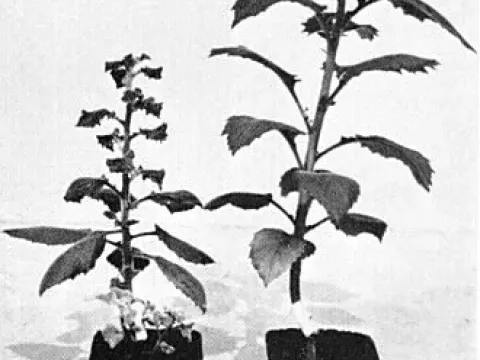
Detection is difficult due to the lack of proteins. Diagnosis relies heavily on molecular biology techniques, such as RT-PCR or biological indexing using sensitive indicator plants.
Citrus exocortis primarily affects citrus trees grafted onto susceptible rootstocks, with Poncirus trifoliata (trifoliate orange) and its hybrids being the most vulnerable.
The viroid causes a severe physiological disorder that disrupts the movement of nutrients between the roots and the canopy. This metabolic imbalance results in significant stunting of the tree.
Reduced vigor leads to lower fruit yields and smaller fruit size, which significantly impacts the economic viability of commercial citrus production.
The damage is systemic. Once a tree is infected, the viroid colonizes all tissues, meaning it cannot be pruned out or cured by localized chemical treatments.
In extreme cases, long-term infection causes total tree decline and death. It remains one of the most economically damaging pathogens in citrus-growing regions globally.
The most iconic symptom is vertical bark scaling on the rootstock. The bark appears to peel off in long, narrow strips, which is the source of the common name "exocortis."
Affected trees show marked stunting or dwarfism. The canopy becomes sparse, and the tree fails to reach its potential size compared to healthy specimens of the same variety.
Leaves may show nutritional deficiency symptoms, such as chlorosis, despite adequate fertilization. This is due to the impaired root system's inability to uptake essential nutrients.
The area of the graft union may become swollen or deformed. These symptoms develop slowly, often appearing several years after the initial transmission of the viroid.
Dieback of branches can occur as the tree weakens. In advanced stages, the tree appears sickly and exhibits general signs of poor health and lack of vigor.
The primary control strategy is the use of pathogen-free propagation material. Only trees certified as viroid-free should be used for establishing new orchards.
Strict sanitation protocols are required for all horticultural activities. Tools must be disinfected between trees using bleach or other effective antimicrobial solutions.
Choose resistant rootstocks that do not show sensitivity to CEVd. This is the most effective long-term strategy for managing the disease in endemic areas.
Early identification and removal are essential. Any tree showing symptoms of bark scaling should be rogued out and destroyed to stop the spread to nearby trees.
- Implement mandatory testing of budwood sources.
- Train staff on the importance of tool sterilization during pruning.
- Use certified nurseries for purchasing young trees.