
Citrus psorosis
Citrus bark
Description
How to identify
Citrus psorosis, commonly known as "scaly bark," is a severe viral disease caused by the Citrus psorosis virus (CPsV). It is a systemic pathogen that primarily affects the vascular tissues of citrus trees.
The virus belongs to the Ophioviridae family. It does not have a confirmed insect vector, making it unique compared to other citrus viruses. Transmission occurs mainly through infected budwood and grafting practices.
The pathogen is characterized by its ability to persist in a latent state for many years. During this period, the host tree remains asymptomatic while serving as an active carrier of the virus to other plants via propagation materials.
Taxonomically, the virus is a persistent plant parasite that disrupts the cambium layer. This interference leads to abnormal cellular development, which manifests as structural damage to the bark of the host tree.
Accurate identification requires specialized diagnostic techniques. ELISA (Enzyme-Linked Immunosorbent Assay) and RT-PCR are the standard methods used by researchers and nurseries to detect the presence of the virus in citrus tissue.
What it damages
Psorosis affects various citrus species, including sweet orange, grapefruit, and mandarin. The damage is most visible and devastating in older, mature trees that have been infected through propagation.
The primary impact is the mechanical and physiological damage to the tree bark. As the scales peel away, the cambium becomes exposed, leading to secondary infections, gumming, and severe reduction in nutrient transport.
Infected trees suffer from chronic decline. Over time, the canopy thins, growth slows down significantly, and the tree becomes less resilient to external environmental stresses like frost, heat, or drought.
Yield losses are substantial, as the tree gradually loses its ability to produce fruit. In many commercial orchards, trees affected by psorosis must be removed, leading to total loss of investment in those specific trees.
The disease acts as a silent killer in nurseries. Because young trees do not show symptoms, nurseries can inadvertently spread the virus across vast geographical areas if rigorous testing protocols are not in place.
Signs of infestation
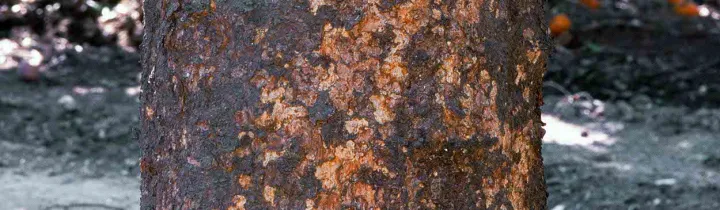
The hallmark symptom is the scaling and peeling of the bark on the trunk and primary branches. These scales can be small or large, and the exposed wood underneath often shows signs of necrosis or discolored streaks.
On young, growing leaves, early-stage symptoms often appear as "flecking" or a pattern resembling an oak leaf. These light-colored patterns are most visible when held up against light.
Gumming is frequently observed as the bark lesions expand. This exudate is the tree's response to the internal vascular damage caused by the viral interference with healthy cambium division.
- Scaling and flaking of the outer bark layer.
- Stunted growth and thinning of the tree crown.
- Characteristic oak-leaf patterns on young leaf blades.
- Wood necrosis and gum exudation on the main trunk.
Symptoms are rarely seen in trees under 5–10 years old. This long asymptomatic period is a major challenge for orchard managers, as infected trees can remain unnoticed while the virus spreads within the orchard.
Control measures
The foundation of psorosis control is the use of disease-free, certified budwood. Establishing new orchards must exclusively utilize nursery stock that has been screened and certified as virus-free.
Once a tree is identified as infected, there is no cure. The standard recommendation is to remove and destroy the tree immediately to minimize the risk of spreading the virus to neighboring healthy trees.
Strict sanitation protocols must be followed during pruning. All tools, such as saws and shears, must be disinfected with bleach or alcohol after working on each tree to prevent mechanical transmission.
There are no chemical pesticides or treatments that can cure a tree of the psorosis virus. All agricultural efforts must be focused on exclusion, sanitation, and the use of healthy, resistant rootstocks.
Implementing a long-term orchard management plan that includes regular monitoring and the exclusion of untested plant material is the only effective way to protect citrus plantations from this chronic disease.
Causes diseases · 1
Discussion
No discussions yet — be the first.