
Description
Symptoms
The initial symptom is the wilting of the youngest leaves, often occurring during the hottest part of the day, with recovery usually taking place overnight.
As the infection progresses, the wilting becomes permanent, the leaves turn yellow, and the entire plant eventually collapses and dies.
A diagnostic sign is the discoloration of the vascular bundles in the stem; when cut, these bundles show a characteristic brown or dark grey appearance.
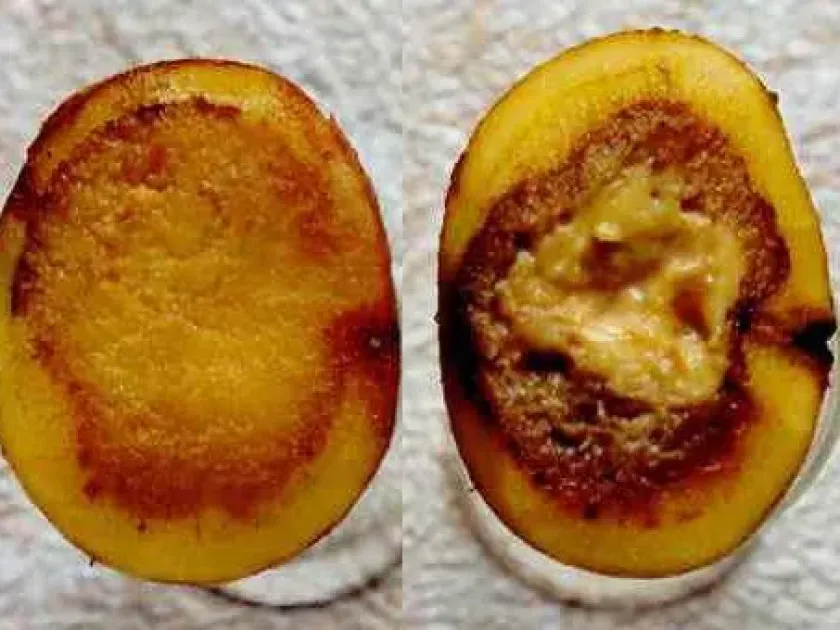
A milky white bacterial ooze can often be squeezed out from the cut stem or vascular ring of an infected potato tuber, which is a hallmark diagnostic feature.
In bananas, the disease, often referred to as Moko disease, results in internal fruit discoloration, vascular staining, and eventual rotting of the pseudostem.
Pathogen
The causal agent of bacterial wilt is Ralstonia solanacearum, a gram-negative soil-borne bacterium that is globally recognized as one of the most destructive plant pathogens.
This pathogen causes a vascular disease by colonizing the xylem, the tissue responsible for water transport, leading to systemic wilting of the host plant.
The bacterium is known for its extreme genetic diversity and its vast host range, infecting hundreds of plant species, including major crops like potatoes, tomatoes, and bananas.
It can survive in the soil, in contaminated irrigation water, and within the root zones of various weed species for extended periods of time.
As a quarantine pest in many countries, R. solanacearum poses a significant threat to agricultural security and international trade of planting material.
Conditions for development
The development of bacterial wilt is highly favored by high soil temperatures, typically ranging from 25°C to 35°C, and high soil moisture content.
The pathogen is primarily spread through infested soil, contaminated tools, machinery, and, most importantly, through infected seeds or vegetative planting materials.
Surface water runoff and irrigation systems facilitate the rapid movement of the bacteria across fields, expanding the area of infestation.
Mechanical injuries to the root system, caused by soil cultivation or pests such as nematodes, provide entry points for the bacteria to invade the plant.
Survival in the soil is supported by the ability of the bacteria to colonize alternate hosts, including common weeds found in agricultural environments.
Why it matters
Bacterial wilt can cause complete crop failure in susceptible varieties under favorable environmental conditions, leading to catastrophic economic losses.
Beyond direct yield loss in the field, the disease impacts post-harvest quality, as infected produce decays rapidly during transit and storage.
Fields infested with R. solanacearum often become unsuitable for the cultivation of susceptible crops for many years due to the pathogen's persistence.
The economic impact extends to the high costs associated with quarantine regulations, diagnostic monitoring, and the eradication of infected plant batches.
In banana plantations, the disease is particularly devastating, as it can kill entire mats and severely limit the longevity and productivity of the production site.
Protection
The most effective strategy is the use of healthy, certified, and disease-free planting material, which prevents the introduction of the pathogen into new areas.
Implementing long-term crop rotation with non-host plants is essential to reduce the bacterial population levels in the soil over time.
Strict sanitation protocols must be applied, including the disinfection of farming equipment and tools, to prevent cross-contamination between fields.
If an infection is detected, rogueing of symptomatic plants together with the surrounding soil is critical to limit the spread of the bacteria.
Integrating resistant or tolerant cultivars and managing soil pH can further enhance the resilience of the crops against bacterial wilt pressure.
Pathogens and affected parts
Affects crops · 1
Discussion
No discussions yet — be the first.