


SKU #59801
·
30 views
Varyag
Wheat
User rating
0 votes0% positive reviews
No ratings yet — be the first.
Type of Development
Spring wheat
Wheat Type
Soft wheat variety
Growing Season
80-90 days
Seed: mass 1.000 pcs seeds
35-40 grams
About product

VARYAG is a variety of soft winter wheat (Triticum aestivum L.) of the medium-maturity type with a vegetative period ranging from 79 to 92 days. It matures simultaneously with the Saratovskaya 42 variety or 2-3 days later. The variety is characterized by moderate drought resistance and moderate lodging resistance. The plants have intermediate height, hollow stalks of medium thickness, and leaves t…
Type of Development
Spring wheat
Wheat Type
Soft wheat variety
Growing Season
80-90 days
Seed: mass 1.000 pcs seeds
35-40 grams
Description
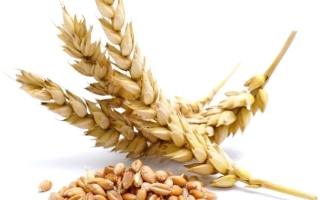
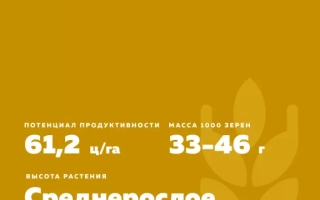
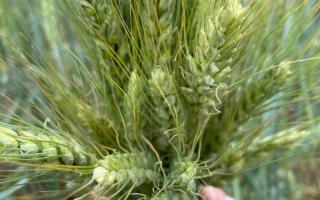
VARYAG is a variety of soft winter wheat (Triticum aestivum L.) of the medium-maturity type with a vegetative period ranging from 79 to 92 days. It matures simultaneously with the Saratovskaya 42 variety or 2-3 days later. The variety is characterized by moderate drought resistance and moderate lodging resistance. The plants have intermediate height, hollow stalks of medium thickness, and leaves that are sparsely pubescent and lack a waxy coating. The ear is cylindrical, white, medium length, and loose, with white, coarse, and spreading awns of medium length. The grain is oval-elongated, white, with a pubescent base and a shallow groove. The 1000-grain weight varies from 33 to 42 grams.
The yield of the VARYAG variety in various regions averages 19.3 centners per hectare, while in the Orenburg region, the figures range from 7 to 24 centners per hectare, exceeding the standards of the Moskovskaya 35 and Saratovskaya 42 varieties by 0.8-2.3 centners per hectare. The maximum yield was recorded in the Kurgan region and reached 45.4 centners per hectare. The baking qualities of the grain are rated as good and excellent, making this variety in demand for the production of quality flour. However, the variety is sensitive to hard and powdery bunt, as well as brown rust, so for crop protection, mandatory seed dressing and fungicide treatments are recommended.
In addition, there is a variety of wheat VARYAG used in animal husbandry as fodder grain for compound feed production. This grain is distinguished by high protein content (11-15%), vitamins B and E, as well as sufficient levels of lysine and phosphorus, making it a high-quality plant feed. Grain moisture does not exceed 15%, and the yield of this option is also high. Such feed is widely used in agriculture for feeding animals.
The yield of the VARYAG variety in various regions averages 19.3 centners per hectare, while in the Orenburg region, the figures range from 7 to 24 centners per hectare, exceeding the standards of the Moskovskaya 35 and Saratovskaya 42 varieties by 0.8-2.3 centners per hectare. The maximum yield was recorded in the Kurgan region and reached 45.4 centners per hectare. The baking qualities of the grain are rated as good and excellent, making this variety in demand for the production of quality flour. However, the variety is sensitive to hard and powdery bunt, as well as brown rust, so for crop protection, mandatory seed dressing and fungicide treatments are recommended.
In addition, there is a variety of wheat VARYAG used in animal husbandry as fodder grain for compound feed production. This grain is distinguished by high protein content (11-15%), vitamins B and E, as well as sufficient levels of lysine and phosphorus, making it a high-quality plant feed. Grain moisture does not exceed 15%, and the yield of this option is also high. Such feed is widely used in agriculture for feeding animals.
Crop & resistance
Crop
Disease resistance
Specifications hover over for a hint about the specification
| Type of Development | |
|---|---|
|
Wheat Type
Wheat Type
Biologically hard wheat differs from soft wheat in its greater demand for soil fertility and agronomic conditions (especially regarding field cleanliness from weeds), lower drought resistance and plasticity, relatively weaker root development, especially nodal roots, and lower ti... |
|
| Growing Season | 80-90 days |
| Seed: mass 1.000 pcs seeds | 35-40 grams |
| Resistance to lodging | |
| Potential Yield | 9-10 tons |
| Registration year | 1997 |
| Catalog | Catalog → Wheat |
| Legal data |
Show · 10
|
| Country | Russia |
Store offers
Prices are updated on loadLoading offers…
Aggregator catalog: prices are collected automatically from store websites, normalized by AI and converted at the current exchange rate. Before ordering, confirm the price and availability on the store's website. This block is not indexed by search engines — the data is loaded after the page opens.
Not yet комментариев. Be the first!
Alternatives
Wheat seeds · similar varieties




See also
Often considered together with this variety





Recently viewed
Products you’ve viewed on this site
Reviews · 0