


SKU #59222
·
34 views
HAMDAN
Wheat
User rating
0 votes0% positive reviews
No ratings yet — be the first.
Type of Development
Winter wheat
Wheat Type
Soft wheat variety
Growing Season
250-260 days
Resistance to lodging
Good
About product

Hamdan is a variety of soft winter wheat (Triticum aestivum L.), belonging to the mid-ripening group. It is recommended for cultivation in various regions, including the North Caucasus and Lower Volga regions, and has been successfully adapted to the soils and climatic conditions of the Karachay-Cherkess Republic and the Central zone of the Kalmykia Republic. The variety is characterized by its re…
Type of Development
Winter wheat
Wheat Type
Soft wheat variety
Growing Season
250-260 days
Resistance to lodging
Good
Description
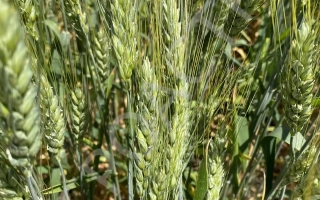
Hamdan is a variety of soft winter wheat (Triticum aestivum L.), belonging to the mid-ripening group. It is recommended for cultivation in various regions, including the North Caucasus and Lower Volga regions, and has been successfully adapted to the soils and climatic conditions of the Karachay-Cherkess Republic and the Central zone of the Kalmykia Republic. The variety is characterized by its resistance to lodging, drought, brown rust, and powdery mildew, making it a reliable choice for cultivation in complex natural conditions. Milling qualities of the grain are assessed as good and excellent, which confirms its value for the production of high-quality flour and bakery products.
In various trials, the Hamdan variety demonstrated high productivity. In the North Caucasus region, the average yield is about 51.8 centners per hectare, and in the Lower Volga region, about 28.9 centners. Maximum yield figures reached 89.2 centners per hectare. In particular, on an experimental plot in the Remontny District, the variety showed a yield of 43.7 centners per hectare, indicating its high adaptability and ability to form stable yields even in semi-desert conditions.
Studies conducted in 2019–2021 in the northern part of the Astrakhan region confirmed the high adaptability and stress resistance of the Hamdan variety. It showed good adaptability coefficients and genetic flexibility, allowing it to successfully withstand arid conditions and climate variability. The vegetative period of the variety is about 259–263 days, which corresponds to early-ripening varieties. Thanks to these qualities, Hamdan is a promising choice for agrarians seeking to obtain high and stable yields in complex soil and climatic conditions.
In various trials, the Hamdan variety demonstrated high productivity. In the North Caucasus region, the average yield is about 51.8 centners per hectare, and in the Lower Volga region, about 28.9 centners. Maximum yield figures reached 89.2 centners per hectare. In particular, on an experimental plot in the Remontny District, the variety showed a yield of 43.7 centners per hectare, indicating its high adaptability and ability to form stable yields even in semi-desert conditions.
Studies conducted in 2019–2021 in the northern part of the Astrakhan region confirmed the high adaptability and stress resistance of the Hamdan variety. It showed good adaptability coefficients and genetic flexibility, allowing it to successfully withstand arid conditions and climate variability. The vegetative period of the variety is about 259–263 days, which corresponds to early-ripening varieties. Thanks to these qualities, Hamdan is a promising choice for agrarians seeking to obtain high and stable yields in complex soil and climatic conditions.
Crop & resistance
Crop
Disease resistance
Specifications hover over for a hint about the specification
| Type of Development | |
|---|---|
|
Wheat Type
Wheat Type
Biologically hard wheat differs from soft wheat in its greater demand for soil fertility and agronomic conditions (especially regarding field cleanliness from weeds), lower drought resistance and plasticity, relatively weaker root development, especially nodal roots, and lower ti... |
|
| Growing Season | 250-260 days |
| Resistance to lodging | |
| Potential Yield | 8-9 tons |
| Registration year | 2021 |
| Catalog | Catalog → Wheat |
| Legal data |
Show · 2 |
| Country | Russia |
Store offers
Prices are updated on loadLoading offers…
Aggregator catalog: prices are collected automatically from store websites, normalized by AI and converted at the current exchange rate. Before ordering, confirm the price and availability on the store's website. This block is not indexed by search engines — the data is loaded after the page opens.
Not yet комментариев. Be the first!
Alternatives
Wheat seeds · similar varieties




See also
Often considered together with this variety





Recently viewed
Products you’ve viewed on this site
Reviews · 0