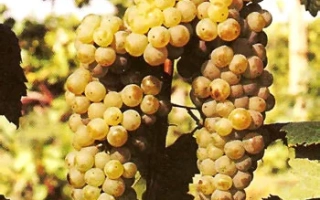
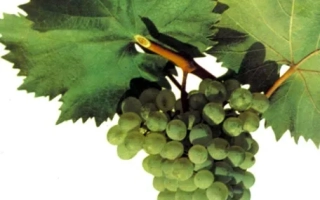
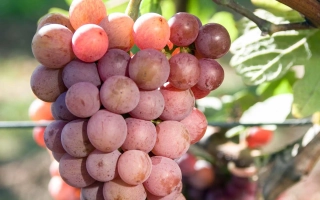
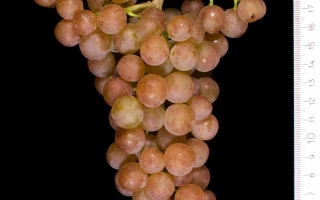
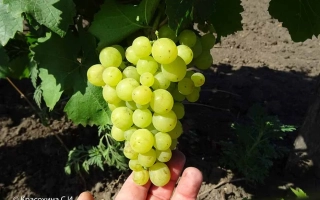
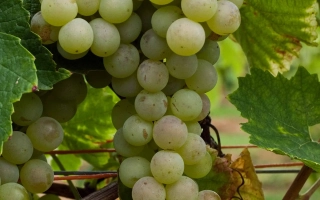
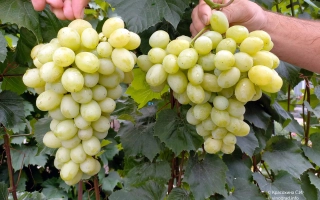
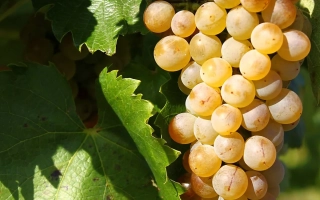
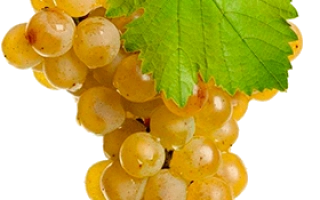
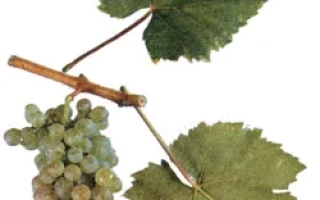
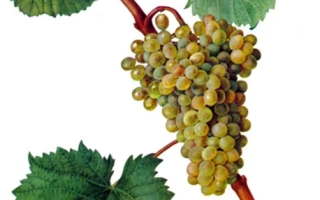
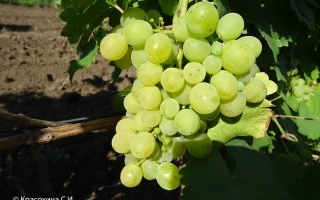
Sauvignon Blanc — a French technical grape variety belonging to the West European ecological-geographical group. This variety is characterized by vigorous growth, light green, almost bare leaves with a yellowish tint and wavy edges. Leaves are medium-sized, round, with varying degrees of lobing, and young shoots and their first leaves are covered with a weak woolly pubescence. Bunches are medium-sized, cylindrical or cylindrical in shape, medium-dense or loose, with long, herbaceous stems. Berries are small or medium-sized, slightly oval, green with a golden tint on the sun-exposed side, containing 2-4 seeds. The flesh is juicy, harmonious in flavor with a slight herbaceous or tomato-like note. The vegetative period lasts about 139 days, with harvest maturity occurring in the second or third decade of September. High yield — average 95 c/ha, maximum up to 148.1 c/ha. The variety shows moderate resistance to mildew but is susceptible to oidium and gray rot, especially in rainy seasons or when harvest is delayed. Cold hardiness is increased, tolerating temperatures down to -21°C. However, trunks and multi-year canes may be affected by bacterial cancer. Sauvignon Blanc tolerates close proximity to groundwater. The agronomic requirements of the variety are not overly demanding regarding soil conditions, but it is best grown on light, cultivated sandy soils. For vine formation, it is recommended to use a bushy multi-stemmed formation with a load of 35-40 buds and 23-24 shoots. During pruning, 3-5 fruiting canes with 10-12 buds are retained, while weak and barren shoots are removed. To reduce flower and fruit drop, the tips of green shoots are pinched back a few days before flowering begins. The variety is used for producing high-quality juices, table wines, and sparkling wine materials, and is also suitable for fresh consumption.