


SKU #46104
·
81 views
Asma
Grape
User rating
0 votes0% positive reviews
No ratings yet — be the first.
Usage Group
Dining
Ripening Period
Late
Cold Resistance
Low (-18°C and below)
Yield
High
About product

Asma — a native Crimean table grape variety, known for its large, dense, conical or cylinder-conical clusters, often with wings. The berries are oval-egg-shaped, purple-black in color with a moderate waxy bloom and tough skin. The flesh is juicy, fleshy, and has a simple flavor. The average weight of 100 berries is about 340 grams, and the weight of a single berry varies from 2.5 to 3.6 grams. Eac…
Usage Group
Dining
Ripening Period
Late
Cold Resistance
Low (-18°C and below)
Yield
High
Description
Asma — a native Crimean table grape variety, known for its large, dense, conical or cylinder-conical clusters, often with wings. The berries are oval-egg-shaped, purple-black in color with a moderate waxy bloom and tough skin. The flesh is juicy, fleshy, and has a simple flavor. The average weight of 100 berries is about 340 grams, and the weight of a single berry varies from 2.5 to 3.6 grams. Each berry contains 1-2 medium-sized seeds. The leaves are large, round, three-lobed with wavy edges and characteristic indentations. The flowers are perfect, promoting good pollination and fruiting. Asma vines are vigorous, with good lignification of one-year shoots, which have light green crowns with a bronze tint and pink edges. Yield varies from medium to very high — from 70 to 150 centners per hectare. Fruitfulness of shoots is about 44%, and the fruiting coefficient reaches 1.3. Pruning is recommended to 8-10 buds at a load of 25-30 shoots per vine. The variety ripens late, usually in mid to late October, allowing for long-term storage and various culinary uses. Asma has relatively good resistance to fungal diseases, which simplifies care and reduces the need for frequent fungicide applications. However, the variety has low frost resistance: bud death may occur at temperatures around -15°C, and according to some data, frost resistance reaches -23°C. The berries have a simple flavor, with sugar content of 15-18% and acidity of 5-7 g/l, making the grapes suitable for fresh consumption as well as for making jams and marinades.
Video · 1 video
Suggest a video →Crop & resistance
Crop
Disease resistance
Specifications hover over for a hint about the specification
| Usage Group | |
|---|---|
|
Ripening Period
Ripening Period
It takes 70-100 days until pepper reaches flowering stage, 130-160 days until technical fruit ripeness, and 135-180 days until physiological ripeness. |
Late |
| Cold Resistance | |
|
Yield
Yield
Overall bulb harvest per unit area. Depends on both onion variety characteristics and agronomic practices, fertilizers, and irrigation. Under optimal growing conditions, an onion yield of 100 tons per hectare and above is not considered record-breaking. |
High |
| Bush Growth Power | |
| Flower Type | |
| Bunch Size | Large (500–800 g) |
| Berry Size | Medium (2–5 g) |
| Berry Color | |
| Flavor | |
| Sugar Content | Average (16–20%) |
| Assignment | |
| Registration year | 1986 |
| Catalog | Catalog → Grape |
| Country | Ukraine |
Store offers
Prices are updated on loadLoading offers…
Aggregator catalog: prices are collected automatically from store websites, normalized by AI and converted at the current exchange rate. Before ordering, confirm the price and availability on the store's website. This block is not indexed by search engines — the data is loaded after the page opens.
Not yet комментариев. Be the first!
Alternatives
Grapevine saplings · similar varieties


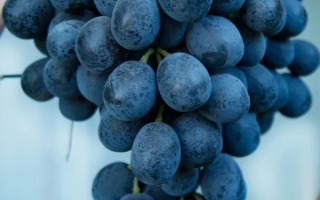


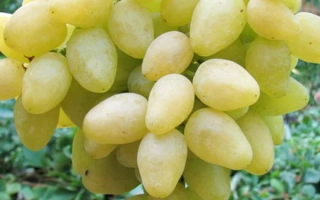
EXPECTED
Фгбоу Во Кубанский Государственный Аграрный Университет Имени И.Т.Трубилина
049 10 offers
2.58 €per seedling ≈ 133 ₴

TEACHER'S MEMORY
ФГБОУ ВО Омский государственный аграрный университет имени П.А. Столыпина
063 8 offers
2.42 €per seedling ≈ 125 ₴
See also
Often considered together with this variety








Recently viewed
Products you’ve viewed on this site
Reviews · 0