


SKU #46099
·
67 views
Chardonnay
Grape
User rating
0 votes0% positive reviews
No ratings yet — be the first.
Usage Group
Technical
Ripening Period
Medium
Cold Resistance
Average (up to -21°C)
Resistance to Mildew
Low
Store offers · 2 from 2 stores
Prices are updated on loadLoading offers…
Available at: Florium · Idea-Sad
Aggregator catalog: prices are collected automatically from store websites, normalized by AI and converted at the current exchange rate. Before ordering, confirm the price and availability on the store's website. This block is not indexed by search engines — the data is loaded after the page opens.
About product

Chardonnay — a technical grape variety belonging to the Western European eco-geographical group. This variety is widely cultivated in France, particularly in Burgundy and Champagne regions, as well as in Germany, Switzerland, Hungary, and the USA. Chardonnay grapes feature light green young shoots with pinkish spots and medium-sized, round leaves with five lobes and slightly hairy undersides. Bunc…
Usage Group
Technical
Ripening Period
Medium
Cold Resistance
Average (up to -21°C)
Resistance to Mildew
Low
Description
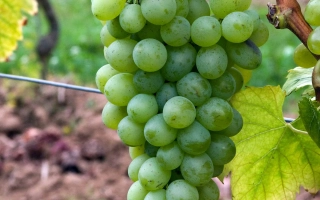
Chardonnay — a technical grape variety belonging to the Western European eco-geographical group. This variety is widely cultivated in France, particularly in Burgundy and Champagne regions, as well as in Germany, Switzerland, Hungary, and the USA. Chardonnay grapes feature light green young shoots with pinkish spots and medium-sized, round leaves with five lobes and slightly hairy undersides. Bunches are cylindrical-conical, medium-sized (11–13 cm long and 8–10 cm wide), weighing about 90–95 grams, and have moderate density, which may vary due to berry drop. Berries are round or slightly oval, greenish-white with a golden tint on the sun-exposed side, covered with a waxy bloom and small brown spots. The skin is thin and firm, flesh juicy with a pleasant varietal aroma, and each berry contains 2–3 seeds. The vegetative period of Chardonnay lasts 138–140 days from bud break to technical maturity of berries, which occurs at the end of September in Odessa. The variety exhibits relatively good resistance to frost and drought, but early bud break makes it vulnerable to spring frosts. Yield is low: approximately 40% of shoots are fruiting, with 1.1–1.7 inflorescences per shoot, and the variety can develop shoots bearing 2–3 clusters. Chardonnay is susceptible to mildew and oidium, and berries may rot in rainy weather. For successful cultivation, avoid excessive crowding and overloading of canes, and during pruning, leave 10–12 buds, forming four fruiting shoots on the bush. Best quality wines are produced on clay-limestone and rocky soils, with preference for western slopes or elevated gentle terrains. Chardonnay is one of the leading varieties for producing high-quality white wines, including renowned Burgundy wines and Champagne. Must contains 74.1% liquid with sugar content of 18–22.9 g/100 ml and acidity of 8.2–11.6 g/l. Wines made from Chardonnay exhibit fruity notes of apple, lemon, citrus, and tropical fruits, while aging in oak barrels imparts hints of vanilla, smoke, and oak. Due to its delicate and compliant bouquet, this variety is widely used as a blending variety in Champagne wines and enables the production of both dry and sweet high-quality wines. In Australia and New Zealand, Chardonnay yields dry wines with a flinty aroma, using cold fermentation and aging.
Video · 10 videos
Suggest a video →Crop & resistance
Crop
Disease resistance
Specifications hover over for a hint about the specification
| Usage Group | |
|---|---|
|
Ripening Period
Ripening Period
It takes 70-100 days until pepper reaches flowering stage, 130-160 days until technical fruit ripeness, and 135-180 days until physiological ripeness. |
Medium |
| Cold Resistance | |
| Resistance to Mildew | |
| Resistance to oidium | |
|
Yield
Yield
Overall bulb harvest per unit area. Depends on both onion variety characteristics and agronomic practices, fertilizers, and irrigation. Under optimal growing conditions, an onion yield of 100 tons per hectare and above is not considered record-breaking. |
Low |
| Bunch Size | Medium (300–500 g) |
| Berry Size | Fine (<2 g) |
| Berry Color | |
| Flavor | |
| Sugar Content | Average (16–20%) |
| Zoning | |
| Care Requirement | |
| Assignment | |
| Registration year | 1958 |
| Catalog | Catalog → Grape |
| Country | Ukraine |
Not yet комментариев. Be the first!
Alternatives
Grapevine saplings · similar varieties






See also
Often considered together with this variety




Recently viewed
Products you’ve viewed on this site
Reviews · 0