

SKU #46109
·
73 views
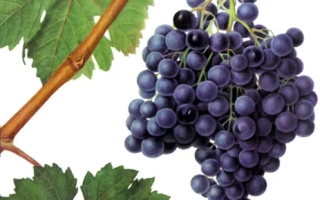
Grape Gárs Lévelű
Grape
User rating
0 votes0% positive reviews
No ratings yet — be the first.
Usage Group
Technical
Ripening Period
Late
Resistance to Mildew
High
Resistance to oidium
Low
About product

Gárs Lévelű — a late-ripening technical grape variety belonging to the ecological-geographical group of the Black Sea basin. This variety is widely cultivated in Hungary, especially in the Tokaj region, and also grown in Ukraine, Croatia, and the USA. The vegetation period of the variety lasts 150-160 days with a sum of active temperatures of 2800-3000°C. The vines are vigorous with good cane matu…
Usage Group
Technical
Ripening Period
Late
Resistance to Mildew
High
Resistance to oidium
Low
Description
Gárs Lévelű — a late-ripening technical grape variety belonging to the ecological-geographical group of the Black Sea basin. This variety is widely cultivated in Hungary, especially in the Tokaj region, and also grown in Ukraine, Croatia, and the USA. The vegetation period of the variety lasts 150-160 days with a sum of active temperatures of 2800-3000°C. The vines are vigorous with good cane maturation, contributing to stable yields of 50-70 centners per hectare. However, the variety is sensitive to winter frosts, requiring appropriate agronomic measures when grown in colder regions.
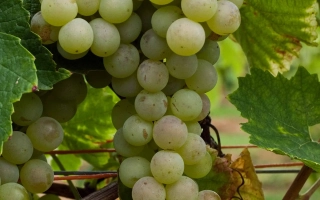
The leaves of Gárs Lévelű are medium-sized, round or three-lobed, with wavy or nearly flat margins, often with a metallic sheen on top and a dense, web-like pubescence underneath. The petiole sinus is open, wide, and lily-shaped. The clusters are cylindrical, elongated, loose, up to 20 cm long, and weakly branched. The berries are small to medium-sized, round, greenish-yellow with a golden hue at maturity. The skin is thin with a slight waxy bloom, and the flesh is juicy and tender. The flavor of the berries is harmonious and refreshing, with high sugar content — under sufficient heat, it reaches 28-30%, with acidity of 7-8 g/l. Over-ripe berries may wilt, further increasing sugar concentration.
Gárs Lévelű exhibits relatively good resistance to downy mildew and phylloxera, but less resistance to oidium and leaf roller. Due to its characteristics, this variety is widely used for producing dessert wines, particularly blended with Furmint in the Tokaj region of Hungary. In Ukraine, wines such as Ay Danil and Alushta are made from this grape. Gárs Lévelű is valued for its high-quality berries and ability to produce wines with rich flavor and aroma.
The leaves of Gárs Lévelű are medium-sized, round or three-lobed, with wavy or nearly flat margins, often with a metallic sheen on top and a dense, web-like pubescence underneath. The petiole sinus is open, wide, and lily-shaped. The clusters are cylindrical, elongated, loose, up to 20 cm long, and weakly branched. The berries are small to medium-sized, round, greenish-yellow with a golden hue at maturity. The skin is thin with a slight waxy bloom, and the flesh is juicy and tender. The flavor of the berries is harmonious and refreshing, with high sugar content — under sufficient heat, it reaches 28-30%, with acidity of 7-8 g/l. Over-ripe berries may wilt, further increasing sugar concentration.
Gárs Lévelű exhibits relatively good resistance to downy mildew and phylloxera, but less resistance to oidium and leaf roller. Due to its characteristics, this variety is widely used for producing dessert wines, particularly blended with Furmint in the Tokaj region of Hungary. In Ukraine, wines such as Ay Danil and Alushta are made from this grape. Gárs Lévelű is valued for its high-quality berries and ability to produce wines with rich flavor and aroma.
Crop & resistance
Crop
Disease resistance
Pest resistance
Specifications hover over for a hint about the specification
| Usage Group | |
|---|---|
|
Ripening Period
Ripening Period
It takes 70-100 days until pepper reaches flowering stage, 130-160 days until technical fruit ripeness, and 135-180 days until physiological ripeness. |
Late |
| Resistance to Mildew | |
| Resistance to oidium | |
|
Yield
Yield
Overall bulb harvest per unit area. Depends on both onion variety characteristics and agronomic practices, fertilizers, and irrigation. Under optimal growing conditions, an onion yield of 100 tons per hectare and above is not considered record-breaking. |
High |
| Bush Growth Power | |
| Bunch Size | Small (up to 300 g) |
| Berry Size | Medium (2–5 g) |
| Flavor | |
| Sugar Content | High (>20%) |
| Assignment | |
| Registration year | 1958 |
| Catalog | Catalog → Grape |
| Country | Ukraine |
Store offers
Prices are updated on loadLoading offers…
Aggregator catalog: prices are collected automatically from store websites, normalized by AI and converted at the current exchange rate. Before ordering, confirm the price and availability on the store's website. This block is not indexed by search engines — the data is loaded after the page opens.
Not yet комментариев. Be the first!
Alternatives
Grapevine saplings · similar varieties


See also
Often considered together with this variety




Recently viewed
Products you’ve viewed on this site
Reviews · 0