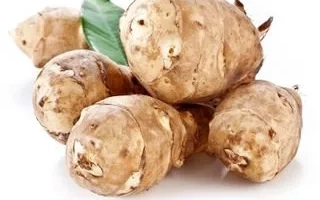
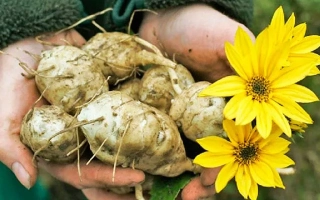
Topinambur, also known as earth pear, is a unique vegetable with white, pear-shaped tubers covered by smooth skin and small eyes. This late-maturing variety is characterized by intensive growth and high yield — up to three kilograms per plant, even on poor humus soils. Topinambur tubers contain a significant amount of inulin — a polysaccharide that, when broken down in the body, forms fructose, does not stimulate insulin secretion, and does not cause wear on the pancreas. Therefore, topinambur is especially beneficial for diabetics and recommended for the prevention and correction of various diseases. The nutritional value of topinambur is due to its rich content of B-group vitamins, A, C, E, as well as microelements — magnesium, zinc, calcium, iron, phosphorus, and iodine. The composition includes amino acids and dietary fiber, which retain their properties even after thermal processing. This contributes to improved digestion, normalization of the gastrointestinal tract, and immune system support. Topinambur helps in anemia, hypertension, arrhythmia, circulatory disorders, atherosclerosis, and also supports modulation of the nervous and immune systems, especially after stress. It also positively affects the pancreas and gastric acid balance, making it beneficial for gastritis, ulcers, colitis, and pancreatitis. Topinambur is widely used in cooking: it can be eaten raw, fried, baked, and used to prepare soups, purées, and salads. Dried and ground tubers are used to make a coffee-like beverage. Due to its low caloric content (only 62 kcal per 100 g) and high starch content, it promotes a feeling of fullness and is often included in weight-loss diets. However, excessive consumption may cause flatulence, so it is recommended to start with a daily dose of about 100 grams. Additionally, regular consumption of earth pear strengthens blood vessels and joints, enhances skin elasticity, preserves tissue youth, and supports male health, including potency and protection of reproductive organs.