


SKU #60986
·
41 views
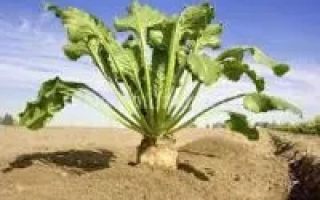
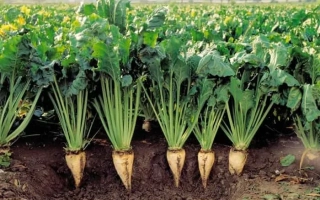
Sugar beet Smena
Sugar Beet
Фгбну Внии Сахарной Свеклы И Сахара Имени А.Л.МазлумоваUser rating
0 votes0% positive reviews
No ratings yet — be the first.
Sugar Content
18-19%
Registration year
2010
About product

A stable sugar beet variety with high sugar content and genetic resistance to Cercospora for predictable yields.
Sugar Content
18-19%
Registration year
2010
Description
Breeding Legacy and Reliability
The sugar beet variety 'Smena' is a product of years of scientific research by the A.L. Mazlumov All-Russian Research Institute of Sugar Beet and Sugar. In the agricultural sector, this variety has established itself as a reliable tool for obtaining high-quality raw materials, combining traditional breeding methods with the rigorous demands of modern sugar beet production.
Key Features and Adaptability
A central advantage of this variety is its high sugar content, which consistently remains in the 18–19% range. Under fluctuating climate conditions, farmers increasingly prioritize seed material capable of resisting plant diseases. 'Smena' demonstrates significant resistance to Cercospora leaf spot, one of the most destructive diseases in sugar beet cultivation that can severely impact both yield and root quality.
Market Positioning
Products from the A.L. Mazlumov All-Russian Research Institute are traditionally aimed at farming enterprises focused on predictable outcomes. The 'Smena' variety is highly sought after in intensive farming regions where crop protection requires a comprehensive strategy. Its use allows agronomists to balance fungicide costs, as the inherent genetic resistance to pathogens significantly simplifies field management.
- Type: Variety
- Crop: Sugar beet
- Manufacturer: A.L. Mazlumov All-Russian Research Institute of Sugar Beet and Sugar
- Sugar Content: 18–19%
- Resistance: Cercospora leaf spot
This variety embodies the institute's scientific approach to stabilizing sugar production. It is an ideal choice for growers seeking proven solutions backed by the authority of a leading specialized research center.
Crop & resistance
Crop
Disease resistance
Specifications
| Sugar Content | 18-19% |
|---|---|
| Registration year | 2010 |
| Catalog | Catalog → Sugar Beet |
| Manufacturer | Фгбну Внии Сахарной Свеклы И Сахара Имени А.Л.Мазлумова |
| Country | Russia |
Store offers
Prices are updated on loadLoading offers…
Aggregator catalog: prices are collected automatically from store websites, normalized by AI and converted at the current exchange rate. Before ordering, confirm the price and availability on the store's website. This block is not indexed by search engines — the data is loaded after the page opens.
Not yet комментариев. Be the first!
Alternatives
Sugar beet seeds · similar varieties





See also
Often considered together with this variety






Recently viewed
Products you’ve viewed on this site
Reviews · 0