


SKU #61097
·
34 views
HM 1820
Sugar Beet
MARIBO SEEDUser rating
0 votes0% positive reviews
No ratings yet — be the first.
Direction Type
Normal Type (N)
Ploidy Type
Diploid
Root vegetable; size
Medium
Root; shape
Oval
About product

HM 1820 is a single-shoot, diploid first-generation sugar beet hybrid created on a sterile base of type N. It belongs to the medium-maturity group and is characterized by a uniform, oval root crop with a soil immersion rate of about 90%. The above-ground part of the root crop has a light-green and green color, while the underground part is white. Leaves are positioned upright and semi-reclined, wi…
Direction Type
Normal Type (N)
Ploidy Type
Diploid
Root vegetable; size
Medium
Root; shape
Oval
Description
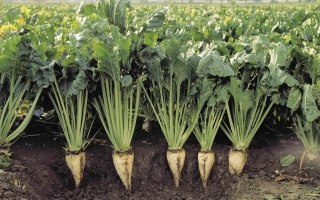
HM 1820 is a single-shoot, diploid first-generation sugar beet hybrid created on a sterile base of type N. It belongs to the medium-maturity group and is characterized by a uniform, oval root crop with a soil immersion rate of about 90%. The above-ground part of the root crop has a light-green and green color, while the underground part is white. Leaves are positioned upright and semi-reclined, with medium color intensity, which ensures optimal photosynthetic feeding of the plant. The root crop mass is about 567–584 grams, which contributes to high yield. Hybrid HM 1820 is recommended for cultivation in the Central Black Earth, Middle Volga, and Urals regions, and is also suitable for Altai and southern regions. The sowing rate is 1 sowing unit per 1–1.2 hectares. The vegetation period lasts from 150 to 160 days. The average root crop yield reaches 440–497 centners per hectare, while sugar content varies from 17.4% to 20%, ensuring high sugar collection – up to 85.7 centners per hectare. The hybrid's responsiveness to agro-conditions is assessed as average. The hybrid is resistant to a number of diseases: it is weakly affected by root rot, moderately by rootworm, but is susceptible to cercosporosis. By agronomic indicators, the hybrid has high yield and sugar potential, good juice quality, and plasticity. The use of modern fungicides ensures seed protection and promotes stable plant development. HM 1820 is a reliable choice for obtaining high-quality raw material with high sugar content and good storability.
Crop & resistance
Crop
Disease resistance
Specifications hover over for a hint about the specification
| Direction Type | |
|---|---|
| Ploidy Type | |
| Root vegetable; size | |
|
Root; shape
Root; shape
Roots can be round, elongated-round, cylindrical, conical. |
|
| Sugar Content | 17-18%, 18-19%, 19-20% |
|
Recommended Density
Recommended Density
Optimal productivity is achieved at a planting density of 4000-5500 plants/ha. Possible planting scheme: 300-500x40-80 cm. |
60-70k pcs/ha, 70-80 thousand pcs/ha |
| Registration year | 2001 |
| Catalog | Catalog → Sugar Beet |
| Manufacturer | MARIBO SEED |
| Legal data |
Show · 3
|
| Country | Denmark |
Store offers
Prices are updated on loadLoading offers…
Aggregator catalog: prices are collected automatically from store websites, normalized by AI and converted at the current exchange rate. Before ordering, confirm the price and availability on the store's website. This block is not indexed by search engines — the data is loaded after the page opens.
Not yet комментариев. Be the first!
Alternatives
Sugar beet seeds · similar varieties




See also
Often considered together with this variety


Recently viewed
Products you’ve viewed on this site
Reviews · 0