


SKU #61098
·
38 views
Sugar beet RUS
Sugar Beet
Фгбну Внии Сахарной Свеклы И Сахара Имени А.Л.МазлумоваUser rating
0 votes0% positive reviews
No ratings yet — be the first.
Direction Type
Normal-Yield Type (NE)
Ploidy Type
Diploid
Root vegetable; size
Medium
Root; shape
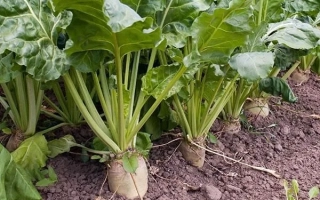
Cylindrical-conical
About product

A reliable diploid variety with high sugar content and complex resistance to major beet diseases.
Direction Type
Normal-Yield Type (NE)
Ploidy Type
Diploid
Root vegetable; size
Medium
Root; shape
Cylindrical-conical
Description
Stability and Protection: The Breeding Profile of "Rus"
The "Rus" sugar beet variety is a product of years of research by the A.L. Mazlumov All-Russian Research Institute of Sugar Beet and Sugar. It represents a balance between cultivation efficiency and raw material quality. In today's agronomic landscape, where crop protection from pathogens is a priority, this diploid variety occupies a niche as a reliable "normal-yielding" (NE) type, focused on consistent sugar output.
Biological Resilience
The main strength of this model is its genetic adaptation to a wide range of threats common in sugar beet growing regions. The crop demonstrates marked resistance to:
- Cercospora leaf spot, allowing for reduced fungicide application during peak pressure periods.
- Powdery mildew, maintaining healthy vegetative mass until harvest.
- A complex of root rots and damping-off, which is particularly critical during seed germination.
This inherent "base protection" minimizes risks of stand density loss, which is vital for achieving a uniform crop of cylindrical-conical roots.
Production Specifications
"Rus" is a diploid variety, which ensures high germination energy and seed viability. The medium size of the roots, provided proper agricultural practices are followed, helps optimize logistics and mechanized harvesting processes. Sugar content ranges from 17% to 18%, making it a preferred choice for producers aiming for a balance between gross yield and refined sugar output.
Developed with the contribution of leading breeders, including A.V. Kornienko and V.A. Sukhorukikh, this variety represents a logical step in the evolution of specialized breeding, designed to perform under real-world field conditions while accounting for shifting phytosanitary challenges.
Crop & resistance
Crop
Disease resistance
Specifications hover over for a hint about the specification
| Direction Type | |
|---|---|
| Ploidy Type | |
| Root vegetable; size | |
|
Root; shape
Root; shape
Roots can be round, elongated-round, cylindrical, conical. |
|
| Sugar Content | 17-18% |
| Registration year | 2000 |
| Catalog | Catalog → Sugar Beet |
| Manufacturer | Фгбну Внии Сахарной Свеклы И Сахара Имени А.Л.Мазлумова |
| Legal data |
Show · 6
|
| Country | Russia |
Store offers
Prices are updated on loadLoading offers…
Aggregator catalog: prices are collected automatically from store websites, normalized by AI and converted at the current exchange rate. Before ordering, confirm the price and availability on the store's website. This block is not indexed by search engines — the data is loaded after the page opens.
Not yet комментариев. Be the first!
Alternatives
Sugar beet seeds · similar varieties




See also
Often considered together with this variety



Recently viewed
Products you’ve viewed on this site
Reviews · 0