


Prices in stores
No offers yet — stores have not added prices for this product yet.
Similar varieties with prices
-
MR BazleyADVANTA
from 96.83 €
-
 SOLNYSHKOFederal Agrarian Scientific Center of the South-East
from 18.67 €per 1 kg
SOLNYSHKOFederal Agrarian Scientific Center of the South-East
from 18.67 €per 1 kg
-
 VOLZHSKOYE 4RosNIIPITI SK / Saratovskiy GUBI
from 49.43 €
VOLZHSKOYE 4RosNIIPITI SK / Saratovskiy GUBI
from 49.43 €
-
 YukiPeter Bohdan Chykaliuk
from 3.84 €per 1 kg
YukiPeter Bohdan Chykaliuk
from 3.84 €per 1 kg
Direction
Grain
Vegetation Period
90-100 days
Grain: Color
Light Brown
Grain: Protein Content
11-12%
Your mark
0 votes
0% positive ratings
Description
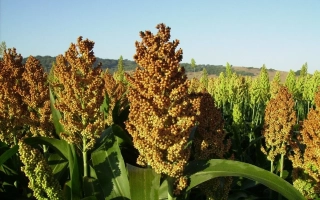
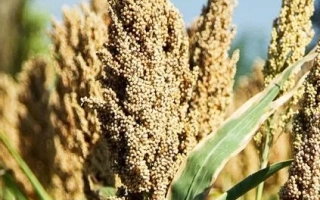
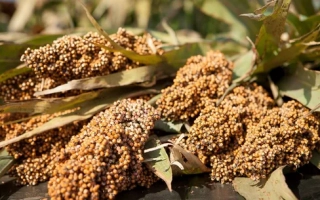
Orion sorghum grain represents a medium-maturity hybrid specifically developed for feed purposes. This variety is characterized by a powerful and sturdy stem, medium foliage with eight to nine leaves, and a bushy habit ranging from one to three stems. The leaves are long, linear, green in color with a lighter midrib. The panicle is erect, compressed, and conical in shape, measuring 24-30 cm in length, colored brown with a lilac tint. The grain is light brown, round, flattened on the sides, mealy in texture, without bitterness or hulls, which facilitates threshing. The mass of 1000 grains ranges from 23.9 to 25.6 grams, while the raw protein content in the grain reaches 11.5%.
The Orion hybrid was bred by crossing the medium-maturity male-sterile line Saratov 776-2s with grain sorghum C-7-89 in the selection and seed production laboratory of feed crops at the South-Eastern Scientific Research Institute of Agriculture. It is characterized by high yield, averaging 39.6 centners per hectare, which exceeds standard indicators. The plants are resistant to lodging, withstand drought well, and possess sufficient cold hardiness at the seedling stage. The length of the vegetative period from seedling emergence to grain waxing maturity is 97-107 days, which allows the variety to be cultivated in various climatic conditions, including northern sorghum-growing zones.
The cultivation technology for the Orion hybrid corresponds to standard methods for grain sorghum grown on a sterile basis. Wide-row sowing with 70 cm row spacing and a seeding rate of 160-180 thousand viable seeds per hectare is recommended. The variety is distinguished by stable seed production due to early ripening and good uniformity of parent forms. The main advantage of the hybrid is high and stable grain yield, which ensures the economic efficiency of its cultivation. Orion grain is widely used as a main component of livestock feed due to its high quality and nutritional value.
The Orion hybrid was bred by crossing the medium-maturity male-sterile line Saratov 776-2s with grain sorghum C-7-89 in the selection and seed production laboratory of feed crops at the South-Eastern Scientific Research Institute of Agriculture. It is characterized by high yield, averaging 39.6 centners per hectare, which exceeds standard indicators. The plants are resistant to lodging, withstand drought well, and possess sufficient cold hardiness at the seedling stage. The length of the vegetative period from seedling emergence to grain waxing maturity is 97-107 days, which allows the variety to be cultivated in various climatic conditions, including northern sorghum-growing zones.
The cultivation technology for the Orion hybrid corresponds to standard methods for grain sorghum grown on a sterile basis. Wide-row sowing with 70 cm row spacing and a seeding rate of 160-180 thousand viable seeds per hectare is recommended. The variety is distinguished by stable seed production due to early ripening and good uniformity of parent forms. The main advantage of the hybrid is high and stable grain yield, which ensures the economic efficiency of its cultivation. Orion grain is widely used as a main component of livestock feed due to its high quality and nutritional value.
Crop & resistance
Crop
Specifications
| Direction | |
|---|---|
| Vegetation Period | 90-100 days |
| Grain | |
| Color | |
| Protein Content | 11-12% |
| Registration year | 1997 |
| Catalog | Catalog → Sorghum |
| Manufacturer | Federal Agrarian Scientific Center of the South-East |
| Legal data |
Show · 9
|
| Country | Russia |
No reviews yet. Be the first to share your experience.
Alternatives
Sorghum seeds · similar varieties




See also
Often considered together with this variety






Recently viewed
Products you’ve viewed on this site
Reviews