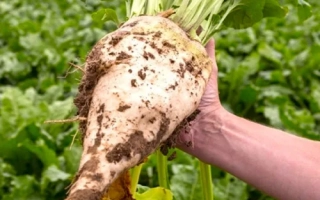
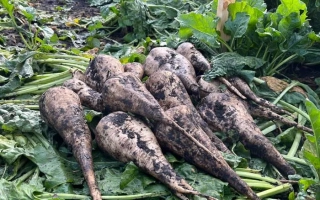
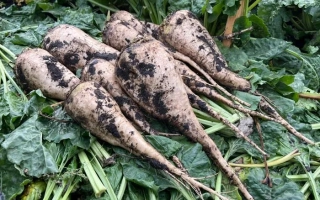
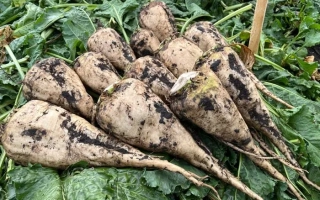
Sugar beet of the Cytoborg variety has high potential for yield and sugar content, making it a sought-after crop for medium harvest periods. The plant has a medium-sized, spreading rosette with dark green leaves, and the root has an oval-conical shape and penetrates the soil to approximately 85%. This variety is distinguished by its resistance to drought, cold, various diseases, and bolting, as well as good storability, ensuring the preservation of the harvest after collection. Sugar beet is warm-loving and heat-tolerant, with an optimal temperature for growth and development of 20–22°C; however, photosynthesis proceeds effectively even at temperatures above 40°C. The plant requires adequate moisture, especially during the intensive growth period of the root in July–August. Due to its well-developed root system, capable of absorbing water from depths up to 2.5 meters, sugar beet tolerates drought well. Seeds germinate at temperatures from +4 to +17°C, with emergence time depending on temperature and varying by 10–15 days. In autumn, the crop can withstand frosts down to -5°C without damage to sugar accumulation. To protect sugar beet crops from annual grasses and broadleaf weeds, it is recommended to use the herbicide Cytoborg, KS, produced by Aquarius. The preparation contains two active ingredients, providing broad-spectrum action. The application rate is 4.0–4.5 liters per hectare, with packaging of 20 liters. The herbicide belongs to the III toxicity class and is low-toxic to mammals, fish, bees, and birds, making it environmentally safe when used properly.