Latona — an early-maturing, high-yielding potato variety of Dutch selection, developed by HZPC Holland B.V. in the early 1990s and included in the State Register of Plants of Russia in 1996. The variety is adapted for cultivation in the Northwestern, Central, and Central Chernozem regions, as well as for moderate climate zones. The vegetation period ranges from 65 to 85 days, with the first harvest possible as early as day 45 after emergence. Plants are tall, upright, with a spreading form and abundant green foliage; leaves are dark green, flowers are white, and flowering is moderate and short-lived. The foliage wilts slowly, stems do not lie on the ground and do not yellow at the end of vegetation.
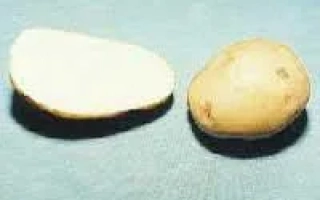
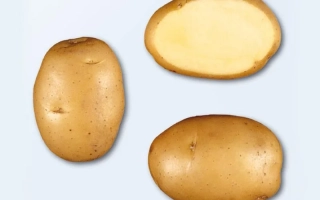
Latona tubers have an oval-round shape with a smooth, firm yellow skin and small, shallow eyes. The average tuber mass is 85–135 grams, with 9–15 tubers per plant. The flesh is light-yellow, does not darken upon thermal processing, has medium texture and starch content of 12–16%, ensuring excellent taste qualities. Potatoes retain their shape when boiled, are suitable for frying, baking, boiling, stuffing, and for making flavorful and aromatic mashed potatoes.
The variety is distinguished by high yield — on average 291–300 c/ha, with early production on day 45 reaching 135–241 c/ha, significantly exceeding standards. Maximum yields were recorded in the Leningrad region — up to 462 c/ha. Tubers have a marketability of 83–95%, and storability under proper storage reaches 90%. Latona exhibits high resistance to late blight, leaf curl, virus Y, golden nematode, potato cancer, and ring rot, as well as good resistance to phytophthora, making it a valuable variety for both industrial and home cultivation.