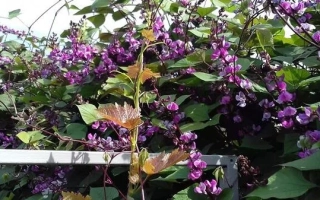
Masha variety «Sultan» (Vigna radiata L.) – an annual herbaceous plant reaching 30–50 cm in height, characterized by rapid development: it takes only 40–43 days from full emergence to full flowering, with a total vegetation period of 68–73 days. Flowers are yellow-green, clustered in racemes of 4–9 pieces, and pods about 6.5 cm long contain 9–11 seeds. Seeds are oval, smooth and matte, green in color with a white hilum; their mass is 33.5–40 g per 1000 grains.
The «Sultan» culture differs in high nutritional value: protein content in seeds ranges from 21.2% to 23.7%, and 100 grams of the product contains about 323 kcal, 23.5 g of protein, and 11.5 g of dietary fiber. Masha is rich in B-group vitamins, vitamin C, micro- and macro-elements (calcium, iron, magnesium, potassium), making it a valuable ingredient in the diet.
The «Sultan» variety is included in the state register for all cultivation zones of the crop and is suitable for mechanized harvesting. It is grown using common bean technology with preferred wide-row sowing, which ensures ease of processing and harvest collection. Masha is not frost-resistant, but under conditions of the Samara region, it achieves a yield of 5.6–10.3 c/ha. The breeder of the variety is the FGBUN «Samara Federal Research Center of the RAS».
In cuisine, masha is valued for its pleasant nutty taste and easy protein digestibility; it is used as a side dish, added to soups, salads, and grain dishes. Thanks to its compactness and high nutritional value, it becomes a popular choice for healthy eating.