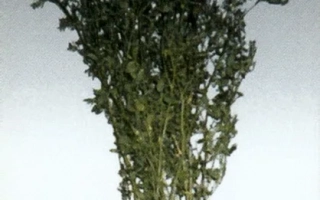
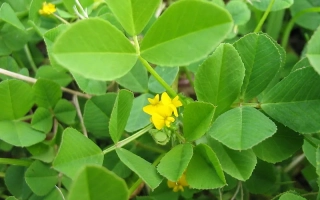
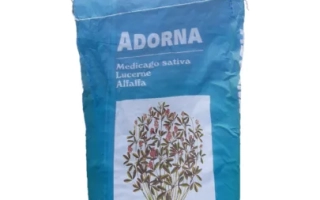
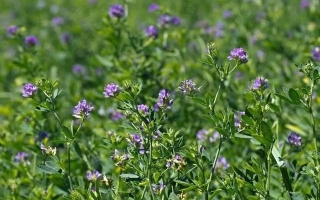
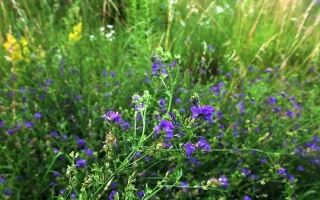
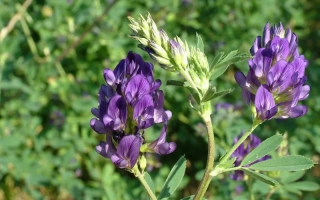
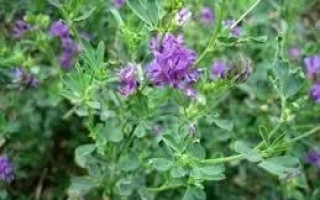
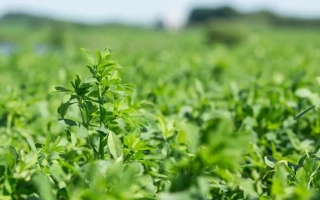
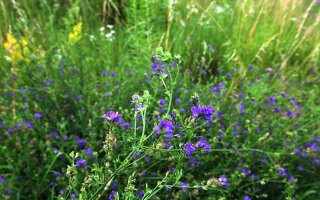
Lucerne of the 'Amber' variety is a perennial plant successfully grown on various soil types, except heavy and acidic poor soils. Sowing is recommended from the end of April to mid-September, with a seeding rate of 150 grams per hundred square meters. Thanks to its deep root system, lucerne provides long-term soil benefits and can yield up to five cuttings per season, making it an economically advantageous crop for farmers.
This crop is a valuable source of vitamins and proteins, making it indispensable in animal feed. In addition to its use as feed, lucerne is widely used in medicine, cosmetology, and culinary applications. It serves as an excellent green manure, helping to restore and enrich depleted soils, thereby enhancing soil fertility and ensuring a stable income for farmers.
Lucerne extract possesses numerous beneficial properties: tonifying, general strengthening, diuretic, antibacterial, anti-inflammatory, and detoxifying effects. It improves metabolism, boosts immunity, normalizes the function of the digestive system and thyroid gland, and regulates pituitary gland function. Lucerne helps reduce blood pressure and levels of 'bad' cholesterol, improves appetite and hemoglobin levels. It is used in treating various diseases, including gastrointestinal disorders, gynecological inflammations, cardiovascular diseases, diabetes, and anemia. Topical application of the extract helps heal wounds, reduce redness and swelling, and improve skin condition.