


SKU #68673
·
38 views
SALINE-RESISTANT
Lucerne
User rating
0 votes0% positive reviews
No ratings yet — be the first.
Plant Height
70-90
Registration year
2004
Prices in stores
from8.36 €per 1 kg
pack from 4.18 € per 500 g
1 offer from 1 store
Store offers · 1 from 1 stores
Prices are updated on loadLoading offers…
Available at: Сади Буковини
Aggregator catalog: prices are collected automatically from store websites, normalized by AI and converted at the current exchange rate. Before ordering, confirm the price and availability on the store's website. This block is not indexed by search engines — the data is loaded after the page opens.
About product

A reliable solution for consistent yields on saline soils, combining resilience with high adaptability to environmental stress.
Plant Height
70-90
Registration year
2004
Description
Managing Saline Soils: The Potential of «Soleustoychivaya» Alfalfa
For farms dealing with soil salinity, yield instability is a constant challenge. The «Soleustoychivaya» (Salt-Tolerant) alfalfa variety, developed by the V.R. Williams All-Russian Fodder Research Institute and the A.N. Kostyakov All-Russian Research Institute of Hydraulic Engineering and Land Reclamation, is specifically engineered to thrive in these restrictive environments.
Morphological Traits and Performance
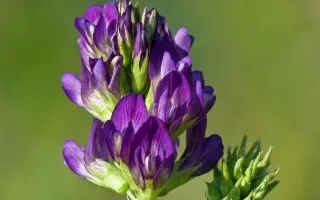
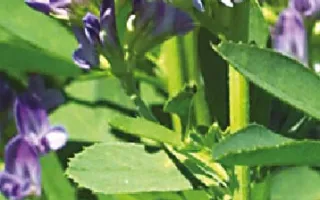
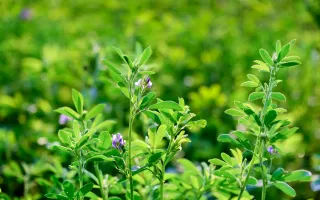
With a plant height of 70–90 cm, this variety offers a balanced structure for efficient mowing and rapid regrowth cycles. Its primary advantage lies in its specialized root system, which maintains nutrient uptake efficiency even in soil profiles with high salt concentrations that would typically inhibit standard varieties.
Field Application and Strategy
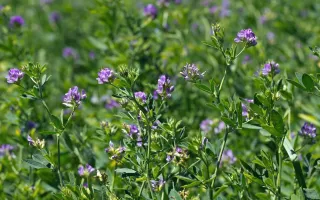
- Optimizing Problematic Lands: This variety is a key asset for crop rotations on lands prone to secondary salinization, particularly in regions relying on mineralized water for irrigation.
- Stabilizing Forage Supply: By maintaining productivity under chemical stress, «Soleustoychivaya» ensures a more consistent volume of hay and haylage, reducing reliance on external feed supplies.
- Biological Land Reclamation: Beyond its role in feed production, the crop acts as a natural soil improver, helping to maintain soil structure and combat degradation on vulnerable plots.
To maximize success, growers should focus on standard soil preparation, ensuring the crop has adequate access to moisture during establishment. While the variety is highly resilient, proper moisture management and baseline fertilization will significantly enhance the tonnage of green mass per season. It represents a practical, low-risk approach to bringing marginal, saline-affected acreage back into profitable agricultural use.
Crop & resistance
Crop
Specifications
| Plant Height | 70-90 |
|---|---|
| Registration year | 2004 |
| Catalog | Catalog → Lucerne |
| Legal data |
Show · 2
|
| Country | Russia |
Not yet комментариев. Be the first!
Alternatives
Alfalfa seeds · similar varieties


See also
Often considered together with this variety





Recently viewed
Products you’ve viewed on this site
Reviews · 0