


SKU #68555
·
40 views
MARUSINSKAYA 425
Lucerne
ONO MORShANSKAYa SELEKTSIONNAYa STANTSIYaUser rating
0 votes0% positive reviews
No ratings yet — be the first.
Plant Height
45-65
Registration year
1938
About product

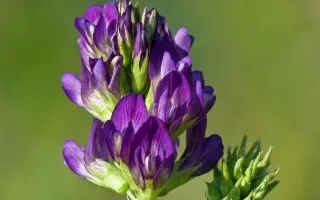
Marusinskaya 425 is a variety of yellow-hybrid type alfalfa, distinguished by its medium maturity and high winter hardiness. The plant has thin stems reaching heights from 45 to 65 cm and is capable of growing on various soil types, including clay, sandy, and solonchak soils. A distinctive feature of this variety is its ability to withstand short-term flooding, tolerating submerged water for up to…
Plant Height
45-65
Registration year
1938
Description
Marusinskaya 425 is a variety of yellow-hybrid type alfalfa, distinguished by its medium maturity and high winter hardiness. The plant has thin stems reaching heights from 45 to 65 cm and is capable of growing on various soil types, including clay, sandy, and solonchak soils. A distinctive feature of this variety is its ability to withstand short-term flooding, tolerating submerged water for up to 30-40 days, which makes it particularly valuable for cultivation on floodplain lands. The variety is characterized by high drought resistance and longevity, allowing its use in various climatic conditions.
The origin of the variety is linked to the Morshansk Breeding Station, where it was created by selecting a floodplain wild form of yellow alfalfa followed by limited free cross-pollination with variable alfalfa varieties. Since its approval for use in 1938, Marusinskaya 425 has been successfully used in the Central, Central Black Earth, Middle Volga, and Western Siberia regions of Russia. The yield of dry matter is from 8 to 13 tons per hectare, and seeds—about 200 kg per hectare. The crude protein content in the plant reaches 16-17%, making it a valuable fodder plant.
Alfalfa Marusinskaya 425 is widely used in agriculture for mowing and pasture purposes. It serves as a source of high-quality feed rich in proteins, carbohydrates, fiber, and minerals. Harvesting is conducted during the flowering phase, ensuring maximum nutritional value and yield. Thanks to its adaptive properties and high productivity, this alfalfa variety is one of the popular and reliable options for fodder production in various regions of Russia.
The origin of the variety is linked to the Morshansk Breeding Station, where it was created by selecting a floodplain wild form of yellow alfalfa followed by limited free cross-pollination with variable alfalfa varieties. Since its approval for use in 1938, Marusinskaya 425 has been successfully used in the Central, Central Black Earth, Middle Volga, and Western Siberia regions of Russia. The yield of dry matter is from 8 to 13 tons per hectare, and seeds—about 200 kg per hectare. The crude protein content in the plant reaches 16-17%, making it a valuable fodder plant.
Alfalfa Marusinskaya 425 is widely used in agriculture for mowing and pasture purposes. It serves as a source of high-quality feed rich in proteins, carbohydrates, fiber, and minerals. Harvesting is conducted during the flowering phase, ensuring maximum nutritional value and yield. Thanks to its adaptive properties and high productivity, this alfalfa variety is one of the popular and reliable options for fodder production in various regions of Russia.
Crop & resistance
Crop
Specifications
| Plant Height | 45-65 |
|---|---|
| Registration year | 1938 |
| Catalog | Catalog → Lucerne |
| Manufacturer | ONO MORShANSKAYa SELEKTSIONNAYa STANTSIYa |
| Country | Russia |
Store offers
Prices are updated on loadLoading offers…
Aggregator catalog: prices are collected automatically from store websites, normalized by AI and converted at the current exchange rate. Before ordering, confirm the price and availability on the store's website. This block is not indexed by search engines — the data is loaded after the page opens.
Not yet комментариев. Be the first!
Alternatives
Alfalfa seeds · similar varieties


See also
Often considered together with this variety



Recently viewed
Products you’ve viewed on this site
Reviews · 0