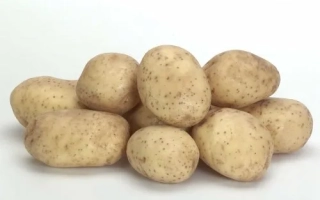
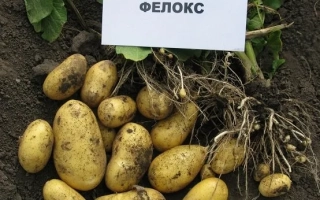
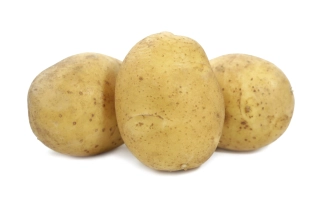
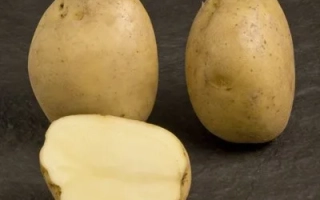
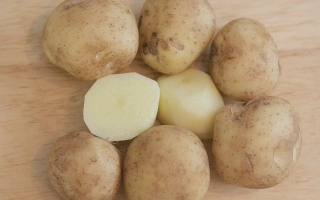
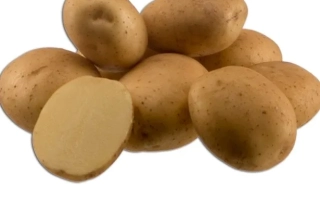
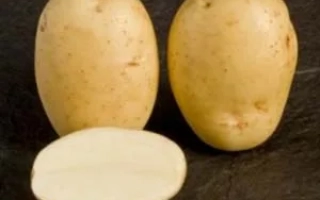
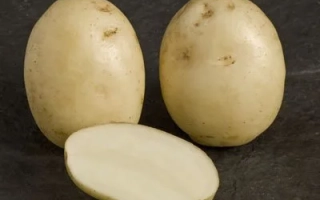
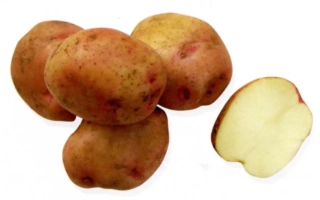
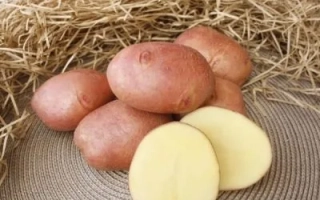
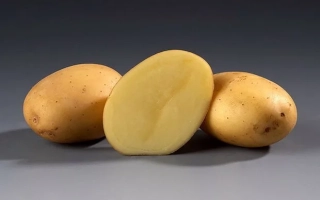
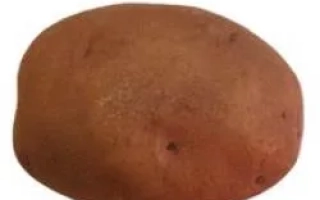
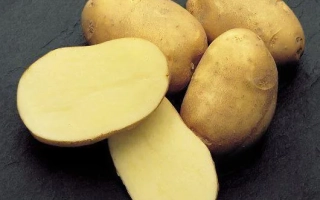
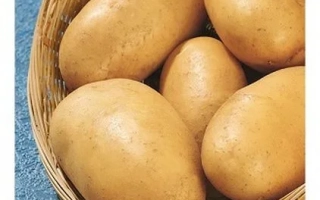
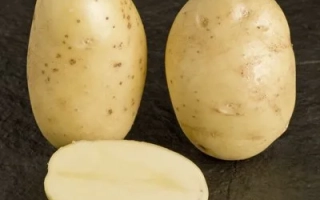
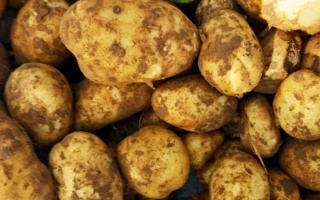
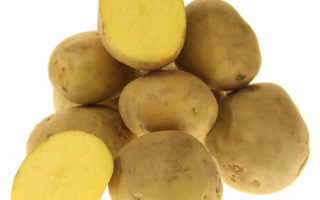
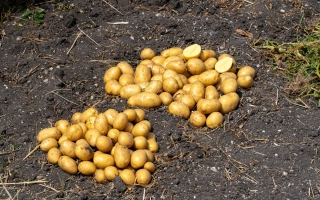
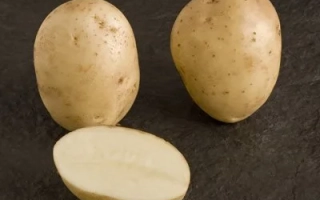
The potato variety Yakutyanka is an early-maturing table variety of Russian breeding, intended for cultivation in the East Siberian and Far Eastern regions. Plants are of medium height, stem-type, semi-erect or spreading, with green leaves of medium and large size. Tubers are oval-round in shape with medium-depth eyes, covered with smooth red skin, white flesh. The mass of marketable tubers varies from 82 to 176 grams, starch content is 10.5–12.9%, providing good taste and versatility in cooking, including boiling, salads, soups, and frying. The variety is characterized by high market yield, ranging from 182 to 276 centners per hectare, with maximum yields up to 356 centners. The first harvest can be obtained as early as the 45th day after emergence, enabling early harvest. The number of tubers per plant reaches 9–12. Tubers have high storability — 95%, ensuring good storage and product preservation over a long period. Yakutyanka is resistant to potato scab, significantly reducing the risk of yield loss, although the variety is susceptible to golden potato cyst nematode. According to research data, the variety is moderately resistant to late blight of foliage and tubers. Thanks to its characteristics and adaptation to climatic conditions of the cultivation regions, the Yakutyanka variety is a reliable choice for farmers aiming for early and high-quality potato harvests.