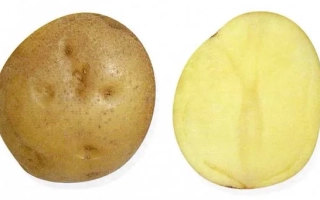
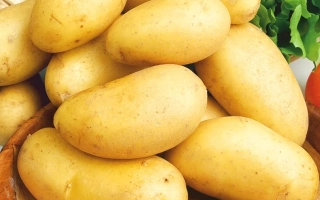
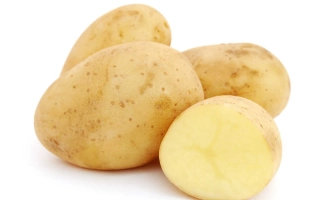
The potato variety Stemluk is a medium-early table variety of Russian selection, intended for cultivation in the West Siberian region. The plant has a low or medium height, intermediate type, and semi-upright form. Leaves are medium-sized, open, green in color with wavy edges of weak to moderate intensity, and the flower is variable from medium to large size with white coloration. Tubers are elongated-oval with medium-depth eyes, smooth yellow skin, and cream-colored flesh.
The ripening period is 65-80 days, which classifies the variety as medium-early. The mass of marketable tubers varies from 125 to 157 grams, and the number of tubers per plant reaches 8-12 pieces. Starch content ranges from 15.2% to 17.3%, ensuring good taste qualities and versatility in cooking: tubers are suitable for frying, boiling, and baking. The variety's marketability is 83-93%, and storability reaches 99%, indicating high tuber preservation during storage.
The Stemluk variety is distinguished by high yield — from 214 to 310 centners per hectare, with maximum yields reaching 470 centners per hectare. It is resistant to such diseases as potato blight (pathotype I) and golden potato cyst nematode, significantly reducing the risk of yield loss. However, the variety is moderately susceptible to phytophthora on both foliage and tubers. Due to its combination of high productivity, disease resistance, and excellent consumer qualities, the Stemluk potato is a reliable choice for cultivation in Western Siberia.