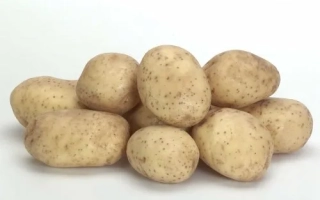
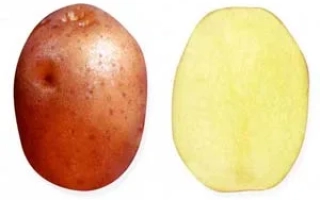
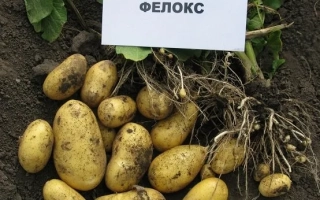
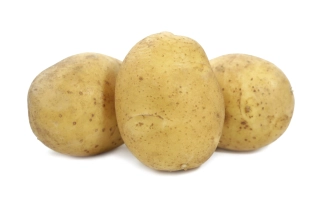
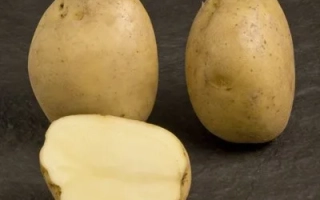
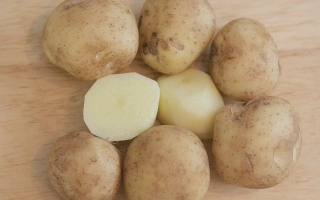
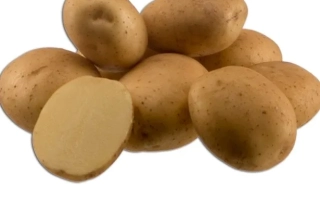
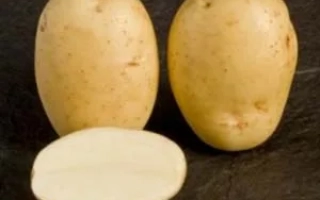
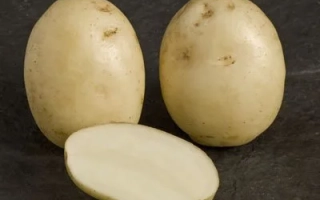
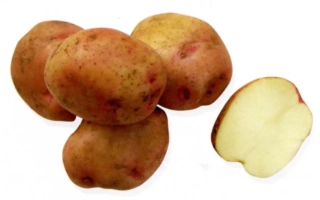
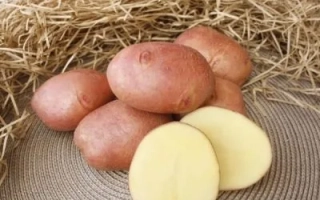
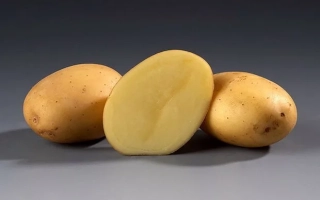
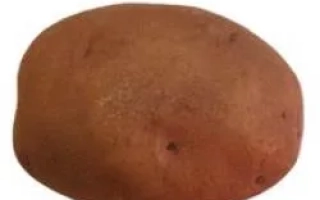
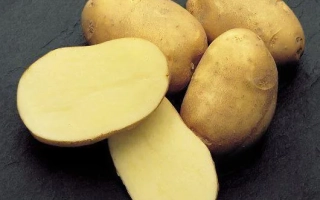
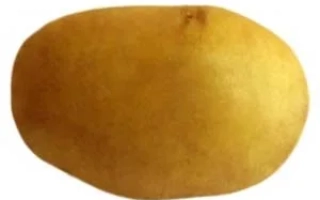
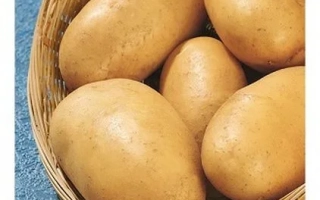
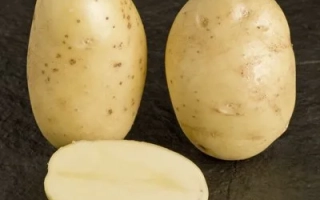
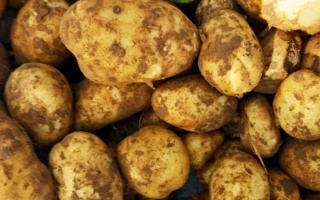
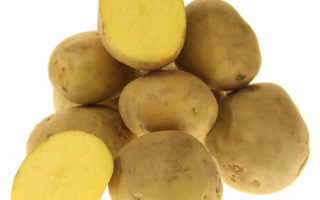
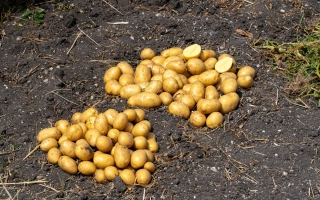
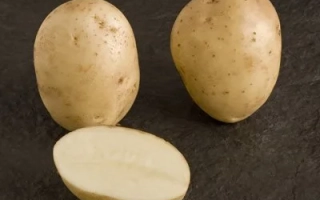
Potato variety Sarma is a medium-early table variety with a maturation period of 65 to 85 days. The plant is of medium height, stem-type, with upright stems and medium-sized, open, green leaves with wavy edges. The flower corolla varies from medium to large size, with no or very weak anthocyanin pigmentation on the inner side. Tubers are oval-round with deep eyes, and both skin and flesh are yellow. Marketable tuber mass ranges from 96 to 168 grams, with 8–12 tubers per plant. The variety is characterized by high market yield, ranging from 262 to 461 centners per hectare, with maximum yields reaching 491 centners per hectare, significantly exceeding the standard variety Nevsky. Starch content in tubers ranges from 14.2% to 15.8%, ensuring good taste qualities rated as good to excellent. Sarma has high marketability (80–97%) and storability (88%), making it convenient for storage and sale. Culinary type BC allows using tubers for frying, baking, and boiling in skins. The variety is resistant to several diseases, including potato cancer pathogen, late blight of stems and tubers, and viral diseases. However, it is susceptible to golden potato cyst nematode. Sarma exhibits resistance to frost and summer drought, ensuring stable yields under various weather conditions. The variety requires minimal care and is recommended for cultivation in Western and Eastern Siberia, as well as in the Far East.