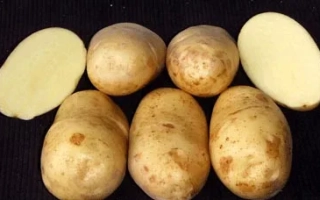
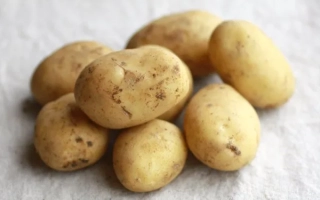
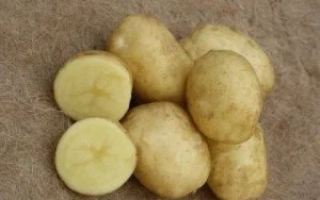
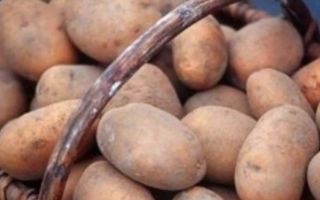
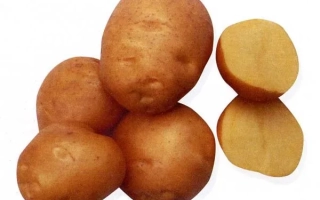
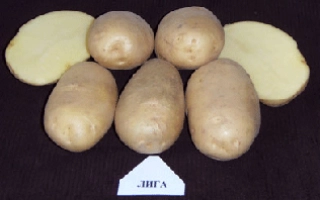
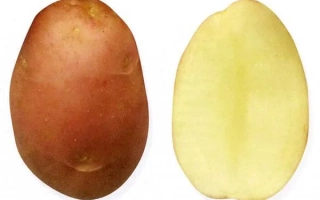
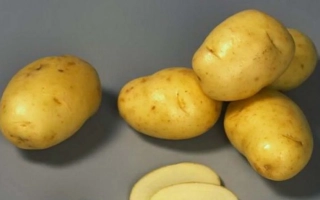
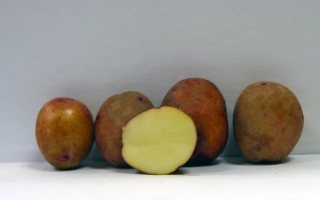
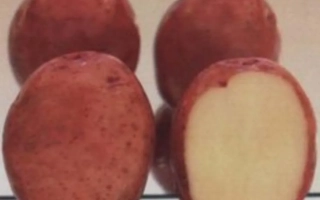
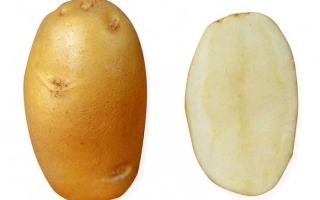
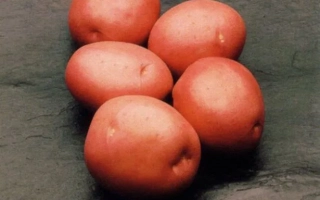
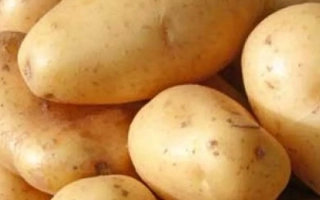
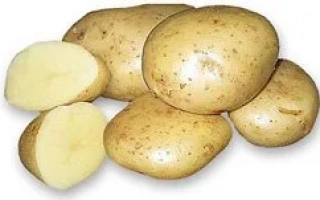
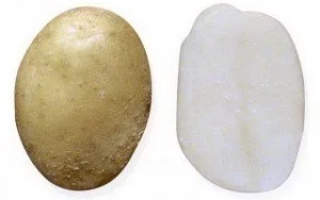
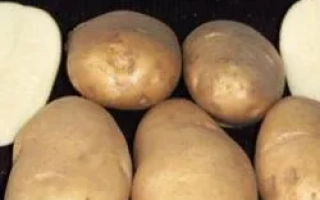
Maestro potato is a mid-early table variety of French selection, characterized by a maturation period of 65 to 80 days. The plant is of medium height, semi-erect with large green leaves and a medium-sized white flower. Tubers are elongated-oval, with smooth or medium-textured yellow skin and yellow flesh. The weight of one marketable tuber ranges from 92 to 172 grams, and the number of tubers per plant ranges from 8 to 14. Starch content is within 10.6–13.6%, defining its culinary type AB, suitable for salads, soups, and frying.
The yield of the Maestro variety is high and stable, reaching 214 to 355 centners per hectare, with maximum yields up to 642 centners per hectare, significantly exceeding the standards of some other varieties. Marketable tuber percentage ranges from 85–98%, and storability reaches 92%, ensuring good product preservation during storage. The variety is distinguished by excellent taste and versatility in culinary use.
Maestro potato exhibits resistance to such serious diseases as potato blight and golden potato cyst nematode, enhancing its reliability in cultivation. However, the variety is susceptible to severe infection by common potato scab, requiring attention during agronomic practices. The originator of the variety is the French company Société Germicopa SAS.