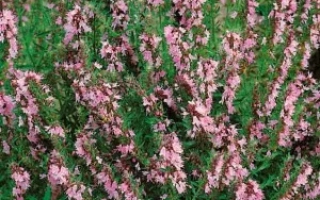
Blue hyssop is a perennial plant of the mint family, distinguished by its bright blue flowering and a scent reminiscent of mint-ginger with a slightly bitter-spicy note. Bushes reach a height of 40–70 cm and a width of up to 60 cm; leaves are linear or lanceolate in shape, 2–4 cm long, dark green in color, and arranged oppositely. From June to October, spike-like inflorescences of blue color form, attracting beneficial insects and making the plant an excellent source of nectar.
The medicinal properties of hyssop are evident in all its parts: leaves, flowers, and seeds contain essential oils that help alleviate nervous tension when dried flowers are added to tea. The plant is used for coughs, colds, infections, wounds, and rheumatism; it is also beneficial for pain and inflammation.
Hyssop is easy to grow: it is sun-loving, drought-tolerant, and frost-hardy, even retaining some greenery in winter. Bushes can be cut with young shoots several times a year, which allows maintaining a compact appearance and stimulating the growth of new branches. Due to its decorative appearance and useful properties, blue hyssop becomes a valuable addition to both the garden and the home first aid kit.