

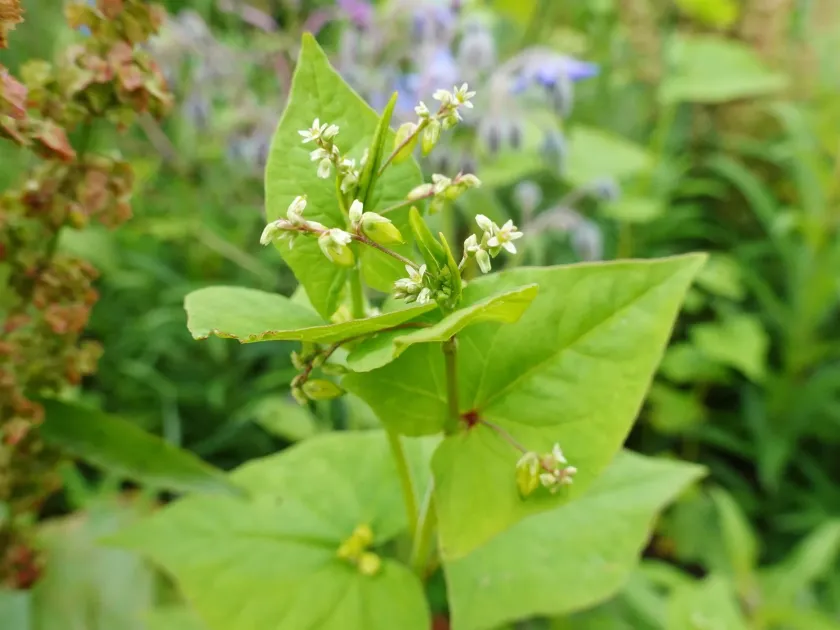
Description
Sowing dates
Tartary buckwheat is a thermophilic crop; therefore, sowing is carried out during the period when the soil temperature at the seeding depth reaches 10–12°C. The optimal time for planting is typically late May or early June in most temperate regions.
Seeds are sown using either solid row drilling or wide-row spacing, depending on the weed infestation levels of the fields and the production goals. Seeding rates must ensure a plant density that allows for effective weed suppression through rapid canopy development.
The sowing depth depends on soil type and moisture content. In heavy soils, the optimal depth is 3–4 cm, while in lighter or drier soils, it may extend to 5–6 cm to ensure uniform germination and the development of a robust root system.
Post-sowing field operations are crucial to ensure seed-to-soil contact for uniform imbibition. In conditions of limited topsoil moisture, the use of cultipackers is highly recommended to improve soil structure and speed up the emergence process.
The crop possesses high initial growth vigor, allowing seedlings to emerge rapidly when minimum moisture requirements are met. This intensive early growth allows Tartary buckwheat to outcompete most common field weeds effectively.
Growing requirements
Tartary buckwheat belongs to the Polygonaceae family and is noted for its high adaptability to challenging climatic conditions. Unlike common buckwheat, this species is significantly more cold-tolerant and can be cultivated in mountainous regions and areas prone to environmental stress.
The crop is not demanding regarding soil type; however, it performs best on light, well-aerated soils with sufficient nutrient availability. The plant is capable of efficiently accessing insoluble phosphorus forms through specific root exudates.
Optimal growth conditions involve moderately warm weather with adequate rainfall during the flowering and grain-filling stages. The plant is sensitive to prolonged droughts, especially during critical developmental phases, which can lead to reduced flower fertility.
Light availability is a vital development factor, as Tartary buckwheat is a long-day photoperiodic plant. Insufficient light levels can lead to stem elongation and a significant decrease in the overall productivity of the photosynthetic apparatus.
In crop rotation systems, this species serves as an excellent precursor for most cereal crops. Due to its superior ability to suppress weed populations, it is often included in organic and sustainable farming programs as a phytosanitary tool.
Yield
Yields of Tartary buckwheat vary depending on the cultivation region and the level of management, generally ranging from 10 to 20 centners per hectare. Under optimal environmental conditions, these figures can be higher due to extensive lateral branching.
The thousand-kernel weight of this species is lower than that of common buckwheat, which is compensated by a higher density of productive nodes per stem. The grain possesses a unique chemical profile, including high levels of rutin, making it a valuable material for the pharmaceutical industry.
Productivity is directly linked to water availability at the onset of flowering. Water stress during this period can trigger the abscission of flowers and young fruit, which severely impacts overall grain yield and seed quality.
To maximize yields, timely application of phosphorus and potassium fertilizers is necessary. Nitrogen fertilizers should be applied with caution to avoid excessive vegetative growth at the expense of grain development.
Given the crop's high potential for self-seeding, strict adherence to harvest timelines is required. Leaving the crop in the field past full maturity can lead to significant grain losses due to natural shattering.
Main diseases and pests
Tartary buckwheat exhibits natural resistance to many diseases affecting other grain crops, largely due to the presence of specific secondary metabolites in its tissues. However, high atmospheric humidity can occasionally trigger fungal infections.
Typical cultivation issues include root rot in conditions of waterlogging or low temperatures during early development stages. This can result in thinning stands and developmental delays that are difficult to correct later in the season.
Among pests, wireworms are the most significant threat, as they damage the subterranean parts of the stem. Buckwheat flea beetles may also appear, particularly during warm and dry periods at the beginning of the vegetative cycle.
To protect plantings, maintaining spatial isolation from other buckwheat species is recommended. This helps avoid unwanted cross-pollination and reduces the risk of accumulating specific pathogens associated with the Fagopyrum genus.
Insecticide use on Tartary buckwheat should be strictly limited because the crop is an important honey source. Integrated pest management focuses primarily on agrotechnical methods, such as proper crop rotation and controlling volunteer plants.
Harvesting
Harvesting Tartary buckwheat requires careful timing due to the non-uniform ripening of grains across different tiers of the plant. The optimal start of the harvest is when 70–80% of the grains on the top and side branches have turned brown.
A two-phase harvest method is most common: swathing is performed first, followed by threshing after the cut biomass has dried. This practice allows for post-harvest ripening within the swaths, minimizing losses during combine operations.
If direct combining is used, desiccants are necessary to dry out the vegetative mass. The use of chemical drying agents results in higher-quality grain and facilitates the cleaning and drying processes at storage facilities.
It is essential to monitor grain moisture during storage; levels should not exceed 14-15%. Higher moisture levels significantly increase the risk of self-heating, loss of germination vigor, and the development of mold within the bulk grain.
Post-harvest processing involves mandatory cleaning to remove impurities, as the presence of weed seeds and stem fragments reduces grain storability. Once cleaned, the material is dispatched to specialized plants for processing into flour or pharmaceutical substrates.
Reference
Connections · Tartary buckwheat
Most often together:
Marketplace
Products · 55


Hepi Star, WG (tribenuron-methyl, 750 g/kg)
Fabrika Agrokhimikatov
Herbicides
0
0
1 offer
25.1 €за кг
Buy


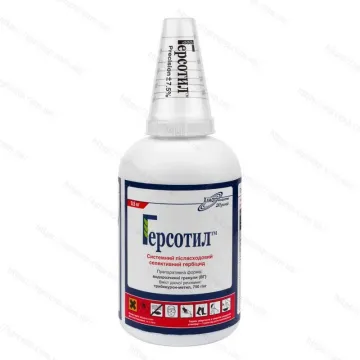


Flagman, herbicide, (bentazon, 480 g/l)
Agrochemical Factory
Herbicides
0
0
1 offer
8.48 €per 1 l
Buy


Gerositol w.r.g., (tribenuron-methyl, 750 g/kg)
Sunrise Agrochemical Co., Ltd.
Herbicides
0
0
2 offers
22.19 €за кг
Buy


