


SKU #47529
·
67 views
Eta
Hazelnut
Oregon State UniversityUser rating
0 votes0% positive reviews
No ratings yet — be the first.
Nut; Fruit mass
2.5-3
Registration year
2022
About product

A promising hazelnut variety from the leading US breeding center, featuring high fruit weight and excellent kernel quality.
Nut; Fruit mass
2.5-3
Registration year
2022
Description
A Breeding Breakthrough from Oregon State University
The 'Eta' hazelnut variety is a product of the long-standing breeding program at Oregon State University (OSU), an institution that consistently sets global standards in hazelnut cultivation. Developed by a team led by Shawn A. Mehlenbacher and David C. Smith, this cultivar embodies the pursuit of high productivity and stability within temperate climates.
Agronomic Profile
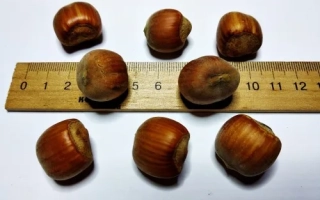
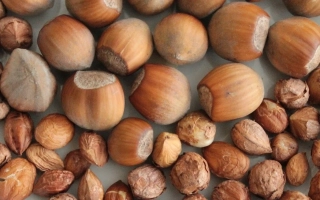
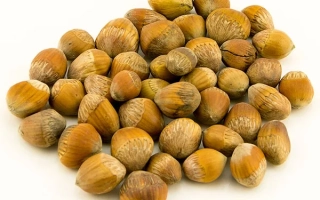
The core advantage of 'Eta' lies in its balanced fruit weight, which typically ranges between 2.5 and 3 grams. This trait makes the nut highly desirable for both industrial processing and the direct-to-consumer market. The nuts are characterized by a high kernel percentage and superior flavor profiles—a hallmark of the nut varieties engineered by the experts at Oregon State University.
- Origin: Oregon, USA.
- Developers: A breeding team headed by Shawn A. Mehlenbacher, Rebecca L. McCluskey, and David C. Smith.
- Application: Ideal for intensive orchard operations focused on achieving high-quality commercial yields.
In the global market, 'Eta' is recognized for its consistency. Unlike many legacy varieties, this hazelnut demonstrates excellent adaptability to mechanized harvesting and industrial storage requirements. By investing in cultivars developed through the original Oregon State University programs, farmers gain access to elite genetics backed by years of rigorous laboratory analysis and field testing.
Specifications
| Nut; Fruit mass | 2.5-3 |
|---|---|
| Registration year | 2022 |
| Catalog | Catalog → Hazelnut |
| Manufacturer | Oregon State University |
| Legal data |
Show · 6
|
| Country | USA |
Store offers
Prices are updated on loadLoading offers…
Aggregator catalog: prices are collected automatically from store websites, normalized by AI and converted at the current exchange rate. Before ordering, confirm the price and availability on the store's website. This block is not indexed by search engines — the data is loaded after the page opens.
Not yet комментариев. Be the first!




See also
Often considered together with this variety





Recently viewed
Products you’ve viewed on this site
Reviews · 0