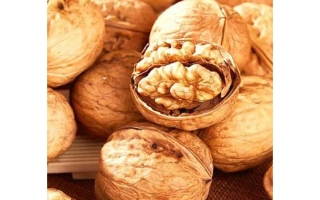
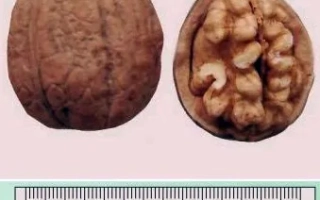
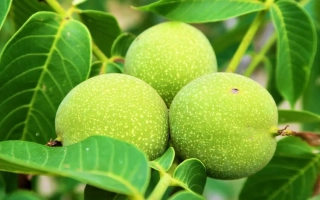
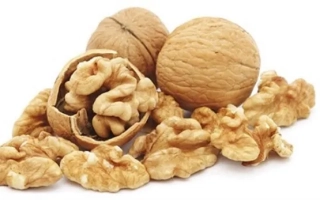
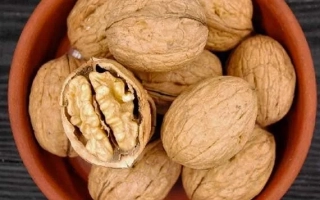
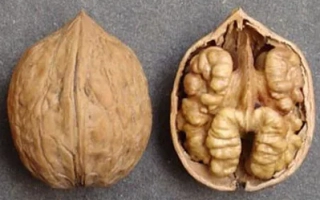
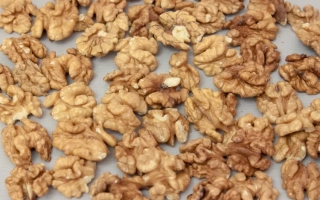
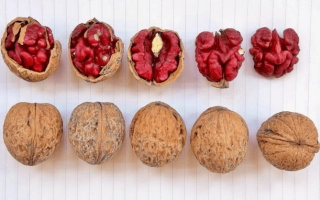
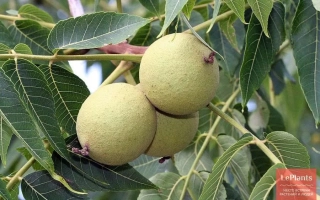
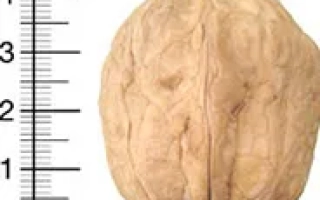
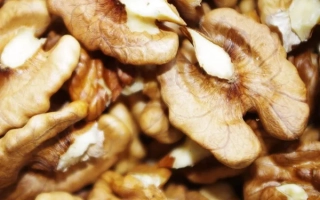
The Chandler walnut is a high-yielding American medium-ripening variety developed in 1979 at the University of California. Trees are medium-sized, reaching 7-8 meters in height, with a dense semi-vertical crown and a large straight trunk. Leaves are elongated, broad at the base and tapering to a point, with light gray bark. Due to its high adaptability, this variety thrives well in Ukraine and Moldova, being resistant to temperatures down to -30°C, drought, and diseases, making it a reliable choice for various climatic conditions. Chandler nuts are large, oval or slightly elongated, weighing 14-16 grams, with a thin cream-colored shell that separates easily without damaging the light-colored kernel. The kernel has excellent taste, is easy to extract, and constitutes 6-8 grams of the nut's total mass. Fruit ripens from late September to early October, allowing for optimal harvest timing. Fruit production begins from the 4th-5th year of the tree’s life, gradually increasing yield: from 25-30 kg in early years to 80-100 kg and more in mature trees. The Chandler variety is ideal for commercial cultivation and industrial production due to its high productivity and excellent fruit appearance. For planting, choose sunny areas with well-drained soil, follow a planting scheme of 6x6, 6x8, or 8x8 meters, and ensure planting holes are at least 60x60x60 cm to comfortably accommodate the root system. The variety is self-fertile, but for increased yield, it is recommended to plant it alongside other varieties, such as Franquette. Chandler responds well to fertilization and exhibits resistance to spring frosts and hot summers.